How I Travelled Across China Speaking Almost No Mandarin and Somehow Didn't End Up In Mongolia
 Tipple Tours
I've always admired people who speak multiple languages.
You know the type. They glide effortlessly through foreign countries ordering food, chatting with locals and asking intelligent questions about history and culture. They appear in travel documentaries drinking tea in ancient villages while discussing regional traditions with complete confidence.
I am not one of those people.
When I travelled through China, long before translation apps became the magical travel companions they are today, my Mandarin vocabulary consisted of approximately two words. Beyond "hello" and "thank you", I was effectively operating as a confused mime artist carrying a backpack and an unreasonable amount of confidence.
The remarkable thing is that it somehow worked. Not perfectly. Not elegantly. But well enough to survive two weeks without accidentally boarding a freight train to Kazakhstan.
The Great Transportation Challenge
One of the first problems I encountered was finding things.
China has one of the most impressive transport systems on Earth. The trains are fast, efficient and capable of moving millions of people across enormous distances. Unfortunately, none of this helps if you can't explain that you're looking for a train station. This became painfully obvious one afternoon in Beijing.
I was trying to ask a local for directions and quickly discovered that my linguistic toolbox was completely empty. Rather than admit defeat, I instinctively resorted to what can only be described as interpretive transport theatre. I mimed pulling a train whistle cord and proudly produced what I believed was an internationally recognised train noise.
"Choo choo."
There was a pause.
An elderly Chinese gentleman stared at me. I stared back. A small crowd started gathering. Then, to my astonishment, the man smiled, pointed down the road and directed me towards the station.
Success.
At no point during my education did I imagine that pretending to be a steam locomotive would become a viable navigation strategy. Yet there I was.
Becoming An Airplane
A few days later I needed to get to the airport.
By now I had completely embraced physical communication as my primary language. Why struggle with vocabulary when public humiliation appeared to be working so well?
Standing outside a hotel, I attempted to explain my destination to a taxi driver. Rather than trying Mandarin, I stretched my arms out like wings and began banking gently from side to side. Somewhere in central China, a confused taxi driver watched a middle-aged British wine merchant transform himself into a Boeing 737. To his credit, he understood immediately.
This became a recurring theme throughout the trip. The less dignity I retained, the more successful communication became. Looking back, I may have accidentally discovered a universal language based entirely on embarrassment.
The Restaurant Survival Strategy
Transport was one thing. Food was another challenge entirely.
In Britain, I can walk into a restaurant and order dinner without much difficulty. In China, I frequently found myself staring at menus that may as well have been encrypted military documents. Occasionally there were photographs. When there weren't, things became considerably more adventurous.
My original strategy involved pointing randomly and hoping for the best. This worked surprisingly well until the day something arrived that looked absolutely nothing like what I'd imagined. At that point I realised I needed a more sophisticated approach.
My revised system involved animal impressions.
The Chicken Incident
One evening I was trying to order chicken but didn't know the Mandarin word. The menu offered no helpful photographs and the waiter spoke no English. This left only one option. I flapped my arms and confidently announced:
"Baaak. Baaak."
The waiter understood immediately. Unfortunately, so did everybody else in the restaurant.
Within seconds several nearby diners were laughing so hard they could barely look at me. There are few moments in life where you realise you've become the evening's entertainment for an entire room of strangers. Performing poultry impressions in a Chinese restaurant is apparently one of them.
The chicken arrived shortly afterwards. It was excellent. I felt this was the least they could do.
The Animal Kingdom Expands
Once the chicken strategy proved successful, things escalated rapidly.
Need pork? A snout gesture and enthusiastic oinking.
Need fish? A swimming motion combined with what I believed was a convincing fish face. Looking back, it probably resembled somebody experiencing a minor medical emergency.
Need duck? A deeply unfortunate combination of chicken noises and waddling.
At various points during the journey I effectively became a one-man wildlife documentary. Local restaurant staff watched me recreate increasingly questionable interpretations of farm animals while somehow managing to understand exactly what I wanted.
The remarkable thing wasn't my performance. It was their patience which is rare in China where locals try and enter the lift before you have exited.
Shopping Without Language Skills
Restaurants were only part of the challenge. Shops introduced entirely new opportunities for confusion.
I once spent several minutes attempting to buy batteries using a combination of pointing, facial expressions and what I believed was a convincing impression of a camera running out of power. Another encounter involved locating a bus station through an elaborate sequence of transport-themed charades that would have embarrassed a professional actor.
Every day became an improvisation exercise. Every interaction felt like a game show where neither contestant understood the rules.
What fascinated me was how willing people were to help. Despite the language barrier, most locals seemed genuinely determined to solve the mystery of what the strange foreigner was attempting to communicate. This was encouraging because I often wasn't entirely sure myself.
Why Travel Is Better When Things Go Wrong
The funny thing is that these communication disasters became the highlight of the trip.
Nobody returns home talking about the time everything worked perfectly. People remember the mistakes, the misunderstandings and the moments where they accidentally spent five minutes pretending to be livestock in order to order dinner.
It's something we've noticed repeatedly on Tipple Tours adventures. Guests often book a trip expecting wineries, breweries or famous landmarks. They leave talking about the unexpected moments. The local characters. The bizarre situations. The conversations that shouldn't have worked but somehow did.
The stories become the souvenir. Everything else is just evidence.
The Universal Language Of Beer
One thing I discovered very quickly is that beer functions as a surprisingly effective translation device. It doesn't solve every communication problem, but it dramatically improves everyone's enthusiasm for solving them.
Walk into a local bar, smile politely and point at a beer, and suddenly life becomes easier. Conversations don't magically become fluent, but barriers start disappearing. People become curious. Laughter appears more frequently.
Some of my favourite experiences in China happened in local bars where nobody spoke English and my Mandarin remained stubbornly limited to approximately two words.
Yet somehow conversations happened. Human beings are remarkably good at communicating when they genuinely want to. Beer occasionally assists.
Why I Never Learned Mandarin
You might think that after two weeks of this I would have learned significantly more Mandarin. This would be a reasonable assumption.
Unfortunately, every time communication broke down somebody helped me anyway. My increasingly elaborate mime routines continued producing results. As a consequence, I never experienced the educational pressure necessary for serious language acquisition.
Instead of becoming bilingual, I became a slightly more versatile idiot. I could imitate trains. I could imitate aircraft. I could imitate most common farm animals. Academically speaking, this wasn't a spectacular achievement. Practically speaking, it proved surprisingly effective.
The Real Lesson
Looking back, China taught me something important. Travel isn't about speaking perfectly. It's about trying.
Most people don't expect visitors to know their language fluently. What they appreciate is effort, curiosity and a willingness to look slightly ridiculous. I provided all three in generous quantities.
The language barrier never prevented great experiences. If anything, it created them.
Without it, I'd never have spent an evening performing chicken impressions for a restaurant audience. I'd never have directed imaginary aircraft for taxi drivers. I'd never have discovered that train noises apparently translate better than actual words.
Those moments became the trip.
Did I Ever Learn Mandarin?
Not really.
I returned home with roughly the same vocabulary I'd started with, plus a few additional phrases and a deep respect for anybody capable of learning Chinese properly.
What I did gain was a collection of stories. Stories about trains, planes, chickens, ducks and the remarkable kindness of people who somehow deciphered my requests despite overwhelming evidence that they shouldn't have been able to.
China was extraordinary. The food was fantastic and the people were incredibly patient. Somewhere across the country there are probably still a handful of locals who occasionally remember the strange British man who communicated entirely through animal impressions and transport-themed charades.
I'd like to think they tell the story sometimes.
Although if they do, they're probably making chicken noises while they tell it.
Explore Related Tours
Turn This Story Into Your Adventure

Editorial Team
The Tipple Tours team writes about wine, beer, and travel based on firsthand experience running tours across Europe since 2018.
Learn more about usContinue Exploring
More Stories You'll Love
 🍺 Beer Adventures
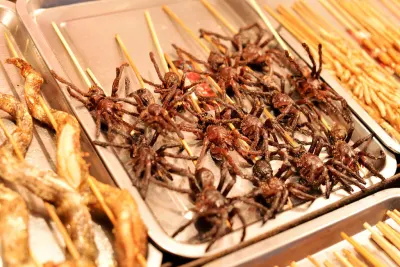
I Went to China Looking for Booze. I Found Snake Wine And Mystery Food
I went to China expecting beer, baijiu and the occasional unusual drink. Instead, I found snake wine, mystery dishes, fascinating local traditions and several moments where curiosity clearly overruled common sense. As travel strategies go, it worked surprisingly well.
 🍺 Beer Adventures
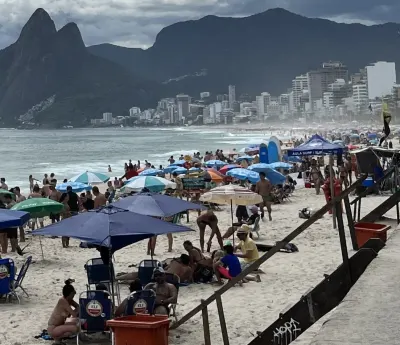
I Flew to Brazil for Three Days at Christmas and Discovered Copacabana Is Much Harder Work Than It Looks
I flew from Britain to Brazil for just three days at Christmas, spent most of Copacabana Beach trying to hold my stomach in, accidentally joined a volleyball game despite not playing since childhood and discovered that Brazilian beer is served at temperatures usually reserved for organ transplants. It may not have been sensible but it was unforgettable
 🍺 Beer Adventures
I Went Looking for a Drink in Saudi Arabia and Found Diet Pepsi, Mystery Meat and a Giant Empty Café
Saudi Arabia was one of the strangest places I've ever visited. I found the world's largest café with almost no customers, a giant bottle-opener skyscraper containing an Anne Summers shop, mystery buffet meat, endless royal portraits and enough Diet Pepsi to concern medical professionals. Somehow, the lack of alcohol ended up being the least unusual part of the trip.
 🍺 Beer Adventures
Why Wine & Beer Tours Are More Fun Than Therapy (And Usually Cheaper)
After years running boozy tours, I've noticed a pattern. Guests arrive stressed, glued to their phones and talking about work. A few days later they're laughing with strangers in vineyards and breweries wondering why they don't do this more often. Coincidence? Possibly. Wine and beer certainly isn't hurting.
 🗿 Soviet & Strange
I Went to North Korea Looking for Booze. Things Got Weird Surprisingly Quickly.
Most people visit North Korea for the history, politics or sheer curiosity. I went because I wanted to know what people were drinking. What followed involved local beer, unexpected meals and the realisation that even the world's most secretive country can surprise a wine merchant.
 🍺 Beer Adventures
The Time We Attempted a 25,000-Mile Around-the-World Pub Crawl and Somehow Made It Home Alive
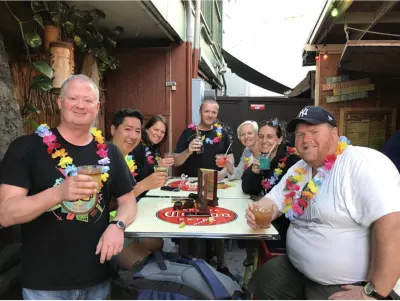
Most pub crawls involve a few streets and a sensible journey home. Ours involved eight countries, four continents, 25,000 miles and a growing inability to remember what day it was. It started with a pint in Heathrow Terminal 2 and somehow ended with seven slightly confused travellers standing in New York wondering how any of this had happened.