Georgia
Georgia
Georgia didn't just invent wine — Georgia invented *wine culture*. Eight thousand years ago, while the rest of humanity was still figuring out agriculture, Georgians were burying clay vessels full of fermenting grapes in their backyards. They called these vessels qvevri, and they're still using them today. UNESCO agrees this matters: Georgian qvevri winemaking is officially Intangible Cultural Heritage of Humanity. If Italy is wine's polished older brother and France is its sophisticated cousin, Georgia is the eccentric relative who invented the whole thing and never stopped throwing parties. This isn't some dusty museum of ancient techniques — it's a living, breathing, slightly chaotic country where every family makes wine, every meal involves toasts, and every toast involves a tamada (toastmaster) who will absolutely not let you leave sober. The food is extraordinary, the hospitality is overwhelming, and the wine is unlike anything you've tasted anywhere else on Earth.
Georgia Tours
2 expert-led small group tours available
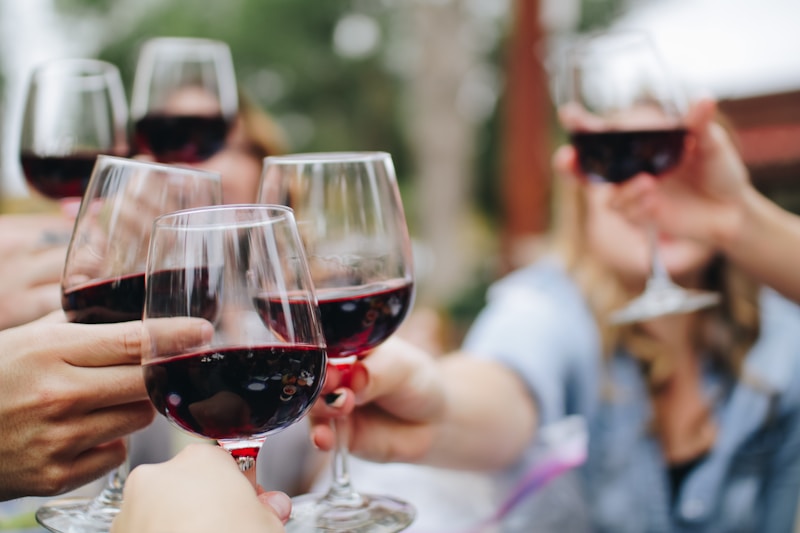
The Just One More Glass Georgia Wine Tour
Five days in Georgia: you arrive a polite wine drinker and leave giving emotional toasts, debating “minerality” like a philosopher and fully convinced a Georgian babushka could outdrink you 🍷
The Pour Identity: Georgia's Mystery Wine Adventure
We tell you the country. After that, you're on a need-to-know basis. Seven days of wine, food, surprises and increasingly unreliable promises of "just one more glass".
Private & Custom Georgia Experiences
Want to experience Georgia's qvevri wines and legendary hospitality with just your group? We offer private Georgia wine tours and can build custom itineraries — whether that's a deep dive into Kakheti's family cellars, a Tbilisi wine bar crawl, or a combination with Armenia.
Private Wine Tours
Our Georgia wine tour is available as a private booking. Your group explores 8,000 years of winemaking history — qvevri cellars, amber wine tastings, and proper supras — with a dedicated guide who knows where to find the best family wineries.
Custom Itineraries
Want to combine Georgia with Armenia? Focus on natural wines? Add mountain trekking to your wine trip? We'll build a bespoke Georgian adventure around your interests.
September-October harvest season (Rtveli) offers the most immersive experience — families often invite private groups to help stomp grapes.
Georgia Highlights
Why Georgia Matters
Birthplace of Wine
Archaeological evidence from 6000 BC
8,000 Years
Documented winemaking history
UNESCO Recognition
Qvevri winemaking is Intangible Cultural Heritage
500+ Varieties
Indigenous grapes found nowhere else
8,000 Years of Qvevri: Georgia's Wine Revolution
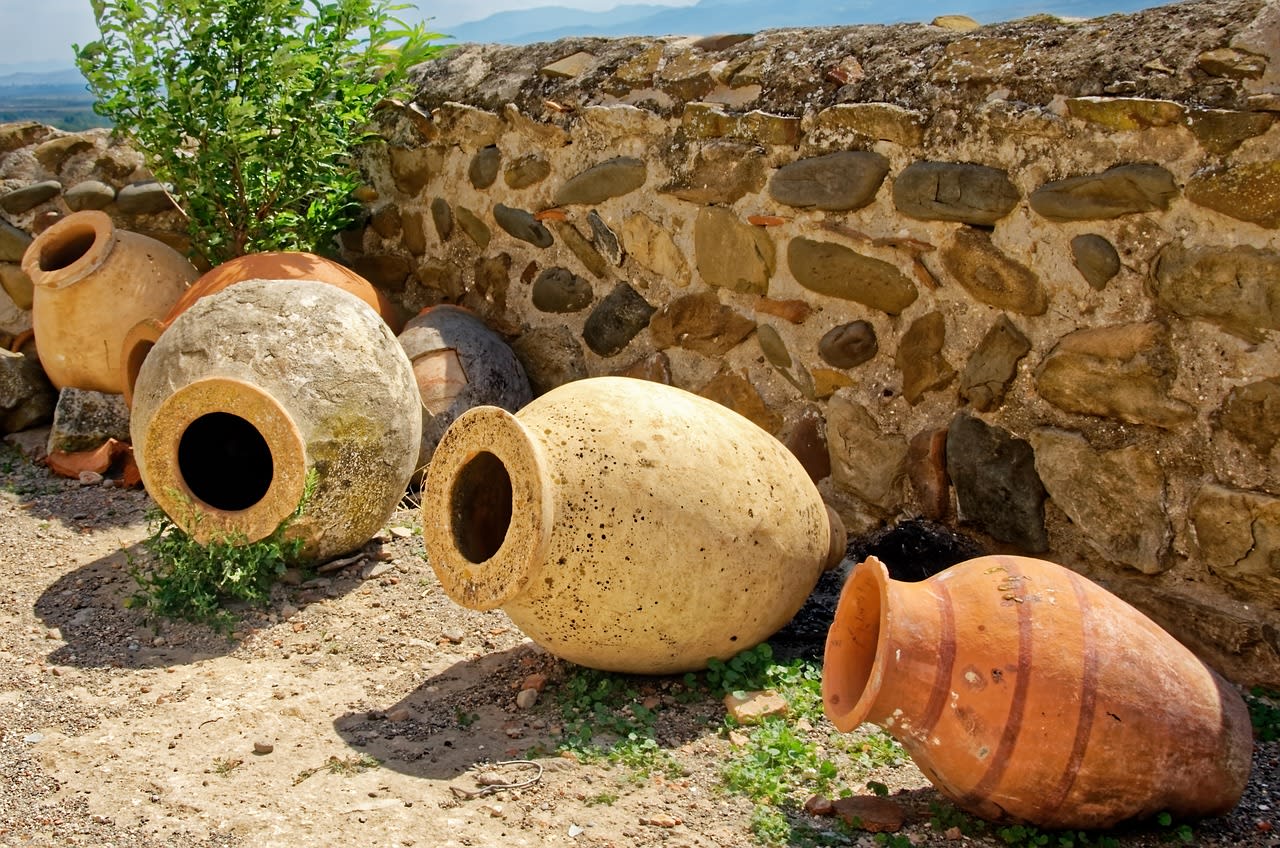
Archaeological evidence confirms it: Georgia is the birthplace of wine. Residue analysis from 6000 BC pottery shards in the South Caucasus shows clear evidence of winemaking — predating any other known wine culture by millennia. But Georgia didn't just start wine; it developed an entirely unique approach. The qvevri — large egg-shaped clay vessels buried underground — became the fermentation and storage method of choice. Grapes go in whole: skins, seeds, stems, everything. The qvevri is sealed with beeswax and buried. Six months later, you have amber wine — white grapes fermented like red wine, with tannins, complexity, and a color ranging from gold to deep amber. This method survived the Soviets (who preferred industrial production), survived Georgian independence (economic chaos), and is now experiencing a global renaissance. Natural wine bars from Brooklyn to Berlin pour Georgian amber wines. But the real magic happens in family cellars across the Kakheti wine region, where the same families have been making wine the same way for generations — and they absolutely insist you stay for dinner. Our Georgian wine tours take you into these cellars.
Georgia has over 500 indigenous grape varieties — more than France and Italy combined. Most have never left Georgia. Rkatsiteli and Saperavi are the famous ones, but varieties like Kisi, Mtsvane, and Tavkveri are worth the trip alone.
Why Tipple Tours Goes to Georgia
We went to Georgia because wine people kept whispering about it like it was some kind of secret. "Have you tried amber wine?" they'd ask, eyes gleaming. "Have you had wine from a qvevri?" We hadn't. So we went. And within 48 hours of landing in Tbilisi, we understood the obsession. Georgian wine isn't just different — it's a completely separate branch of wine evolution. While Europe was aging wine in oak barrels, Georgia was fermenting it underground in clay, skins and all, creating amber wines with tannins, texture, and flavors that don't exist anywhere else. The natural wine movement didn't invent this; Georgia's been doing it for 8,000 years. Add in some of the most genuinely hospitable people on Earth, food that deserves its own UNESCO listing, and landscapes that veer from subtropical coast to alpine peaks, and you've got a Georgia wine tour destination that converts skeptics into evangelists.
Weird Facts & Local Legends
The Supra: World's Most Intense Dinner Party
A Georgian supra (feast) involves a tamada (toastmaster) leading dozens of toasts, each requiring you to drain your glass. Refusing is impolite. Pacing yourself is essential. The toasts follow a specific order: to God, to Georgia, to the deceased, to love, to children... It can last hours. You will not leave sober.
Stalin's Wine Cellar
Joseph Stalin was Georgian and kept a massive wine collection. Some Georgian wineries still have bottles he personally selected. Whether drinking Stalin's wine feels appropriate is a question we leave to your conscience.
The Underground Wine Vessels
Qvevri are buried underground to maintain constant temperature during fermentation. Some family cellars have qvevri that are 300+ years old, still in use, passed down through generations. The vessel becomes part of the wine's character.
Orange Wine Isn't Orange
Georgian 'amber wine' (often called <a href='/blog/how-not-to-swirl-wine-and-why-nobody-cares-anyway' class='text-merlot hover:underline'>orange wine</a> elsewhere) gets its color from extended skin contact with white grapes. The color ranges from pale gold to deep amber. It's not made from oranges. People ask this constantly.
Things to Do in Georgia
Drink Grapes You've Never Heard Of
Rkatsiteli, Kisi, Tavkveri, Mtsvane. By day three you'll be confidently mispronouncing all of them while explaining tannins to strangers.
Taste them on our Georgia wine tourDrink Wine From Buried Clay Pots
Because apparently the Georgians looked at barrels and thought, "What if we buried them instead?" Descend into underground cellars where qvevri have been fermenting wine for 8,000 years.
Read about qvevri winemakingAttend the World's Longest Dinner Party
Somewhere between course four and toast number seventeen you'll realise this isn't dinner. It's a competitive sport. The supra is Georgia's legendary feast tradition.
Experience a supra on our tourGet Delightfully Lost in Tbilisi
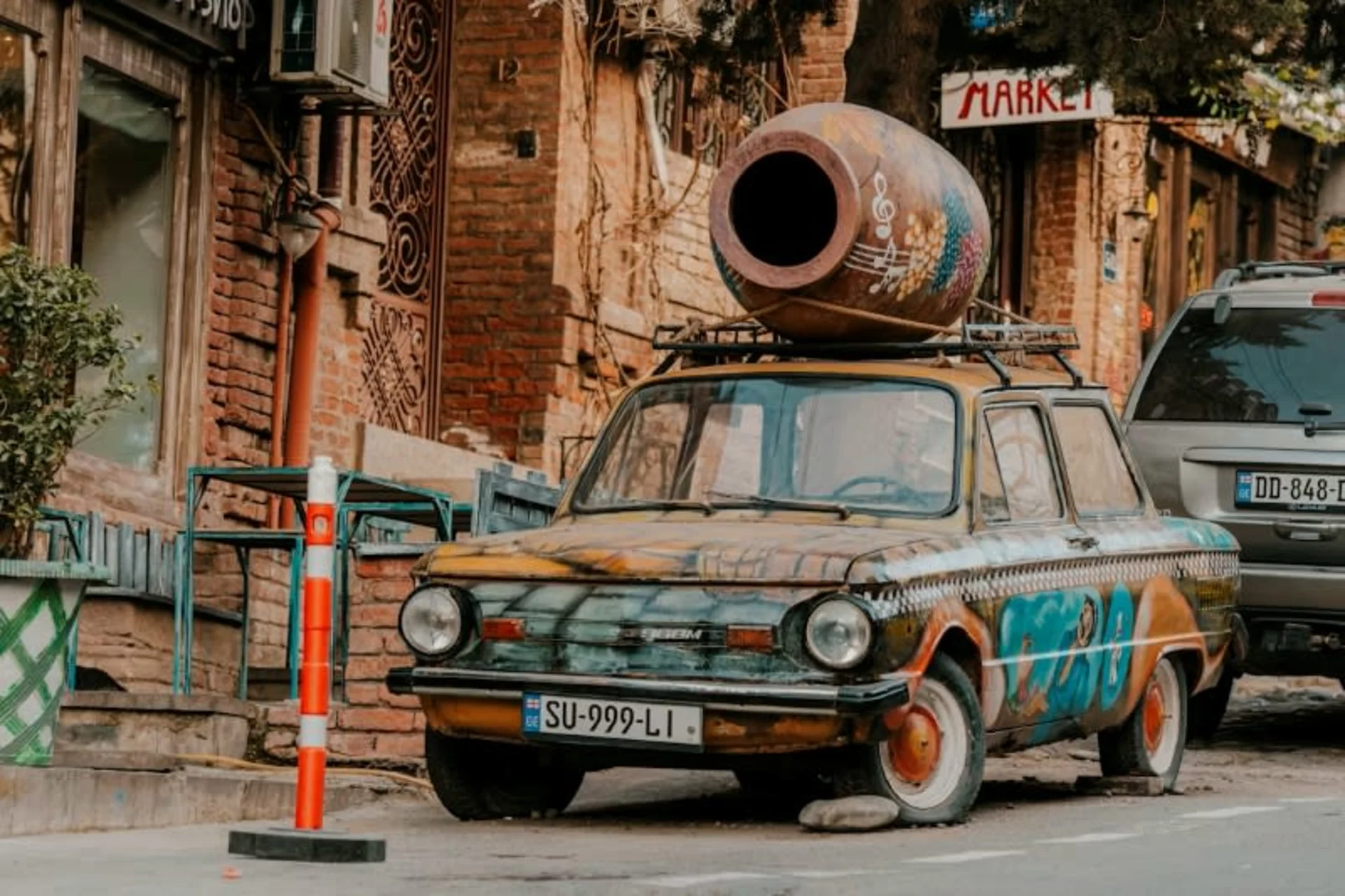
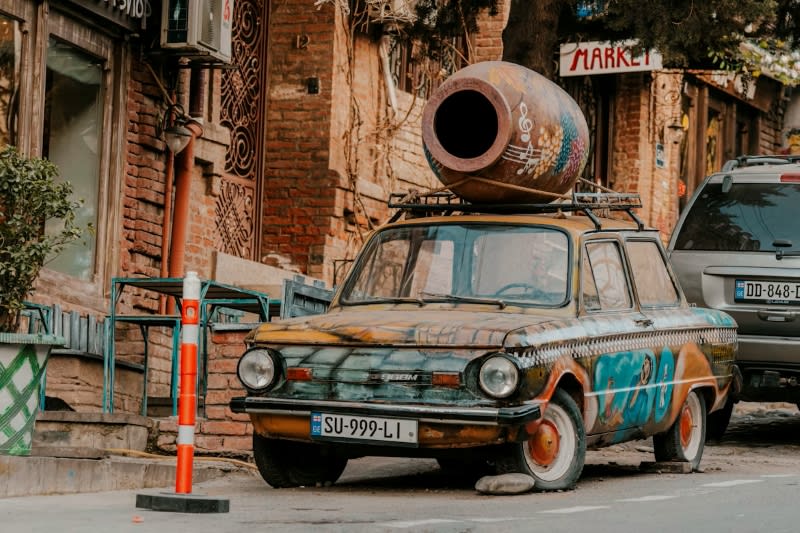
Wine bars hidden in basements, Soviet relics, crumbling balconies and enough alleyways to accidentally spend an entire afternoon exploring. Tbilisi is gloriously weird.
Explore Tbilisi with usTour the Kakheti Wine Region
Georgia's wine heartland, where nearly every family has a cellar. Rolling hills, ancient monasteries, and more wine than you can reasonably consume.
Visit Kakheti on our Georgia wine holidayMaster the Khinkali Challenge
Georgian soup dumplings eaten with your hands. There's a technique. You will probably fail the first time. The broth will escape. Locals will watch with amusement.
Best Time to Visit Georgia
Getting to Georgia
By Air
- Airport
- Tbilisi International Airport (TBS)
- Flight Time from London
- 4-5 hours from London
- Airlines
- Wizz Air (direct from Luton), Turkish Airlines, Qatar Airways, Lufthansa via hubs
- Visa
- UK/EU/US citizens: No visa required for stays up to 1 year. Yes, one year. Georgia really wants you to visit.
Pro Tip
Wizz Air direct flights are often under £100 return. Tbilisi airport is 20 minutes from the city center. The metro costs about 20p and works fine.
Local Tips for Georgia
Learn "Gaumarjos!" (cheers) — you'll say it approximately 47 times per supra.
Never refuse a toast. You can sip instead of draining, but the glass must touch your lips.
Georgian time is flexible. "5 minutes" means 30. "Soon" means eventually. Relax into it.
The script looks intimidating but Georgians appreciate any attempt at their language.
Tbilisi has incredible wine bars. Don't sleep on the city just because Kakheti gets all the attention.
Chacha (grape brandy) appears after dinner. It's strong. Approach with caution and respect.
What Our Guests Say About Georgia
"I thought I understood wine. Georgia completely rewrote my understanding. The qvevri wines, the supras, the hospitality — it's not just a wine trip, it's a cultural immersion that happens to involve a lot of drinking."
David R.
Just One More Glass, 2024
"We've done wine tours in France, Italy, and Spain. Georgia was different in the best way — less pretentious, more personal, and the amber wines are genuinely unlike anything else. The supra tradition alone is worth the trip."
Emma & Tom S.
Just One More Glass, 2025
"The Pour Identity was genius — not knowing where we were going added excitement, and Georgia exceeded every expectation. Tbilisi's wine bars, the family cellars in Kakheti, the food... I'm already planning my return."
Sophie L.
The Pour Identity, 2025
Georgia Travel FAQs
Is Georgia the birthplace of wine?
What is amber wine?
What is a qvevri?
How much wine is consumed during a supra?
Is Georgia expensive for tourists?
Can beginners enjoy Georgian wine?
When is harvest season in Georgia?
What food is Georgia famous for?
Is Georgian wine good?
Is Georgia safe for tourists?
What is a supra?
How is Georgian wine different from Armenian wine?
Ready to Explore Georgia?
Join one of our small group tours and experience Georgia like a local.