Moldova
Moldova
Moldova doesn't show up on most people's bucket lists. That's precisely why it should be on yours. This tiny landlocked country wedged between Romania and Ukraine produces more wine per capita than anywhere on Earth, has underground cellars so vast they require actual roads and traffic signs, and maintains a breakaway Soviet republic that still uses the hammer and sickle on its currency. It's the kind of place where your grandmother would make you a five-course lunch, your taxi driver would become your best friend, and you'd stumble into a wine cellar containing more bottles than the entire annual production of New Zealand. If Napa Valley is wine tourism in a tailored suit, Moldova is wine tourism in your dad's old jacket — unpretentious, surprisingly comfortable, and hiding something brilliant in every pocket.
Moldova Tours
4 expert-led small group tours available
Moldova Wine Tour: Sip Happens Underground
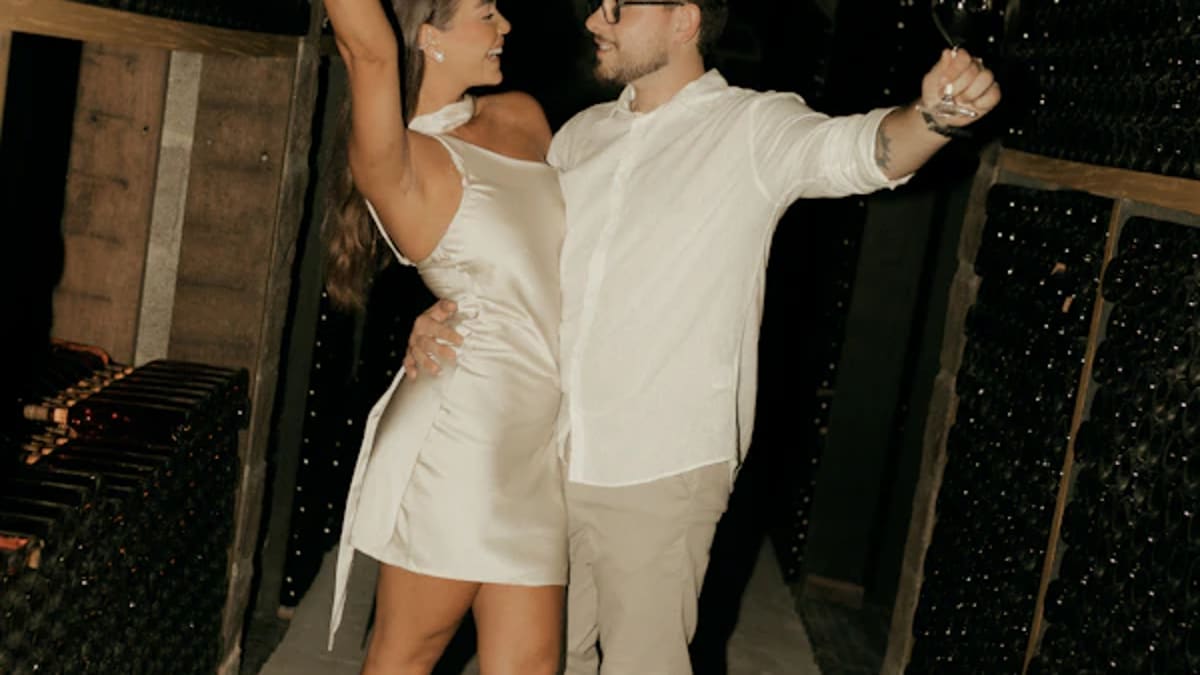
Europe's least visited country, underground wine cities, Soviet nostalgia and gloriously tipsy secrets.
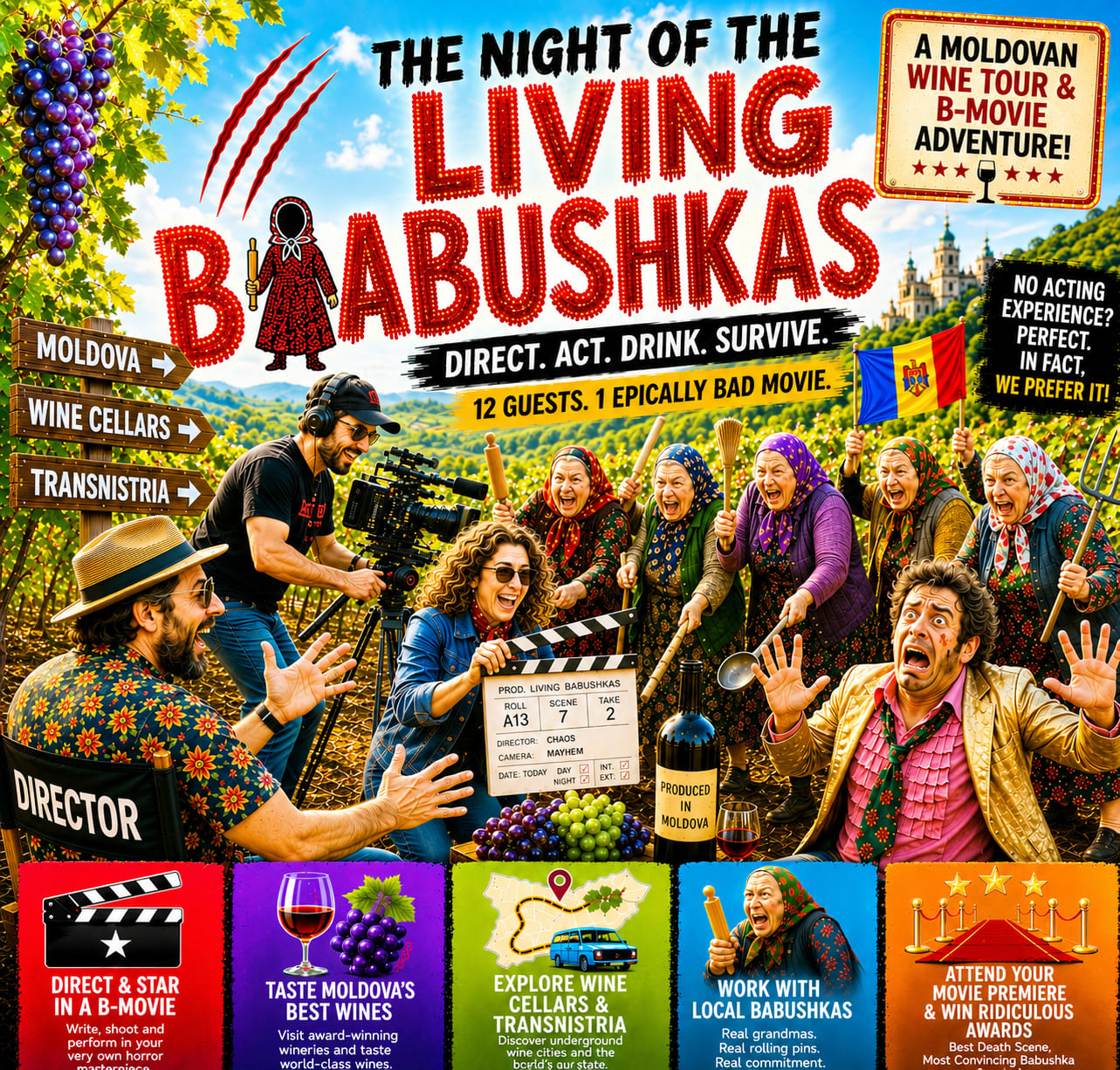
The Night of the Living Babushkas: A Moldovan Wine Tour & B-Movie Adventure
A seven-day Moldovan wine tour where 12 complete strangers drink great wine, explore Soviet sights and, erm, make an intentionally terrible horror movie about zombie babushkas taking over the country. Direct it. Star in it. Survive it. Then watch the finished disaster at a red-carpet premiere on the final night. Rated R for rolling pins, red wine and regrettable acting.

The Mystery One-Day Moldovan Wine Tour
Three mystery wineries, one enormous local lunch and enough Moldovan wine to make Winery Number Three considerably more mysterious.
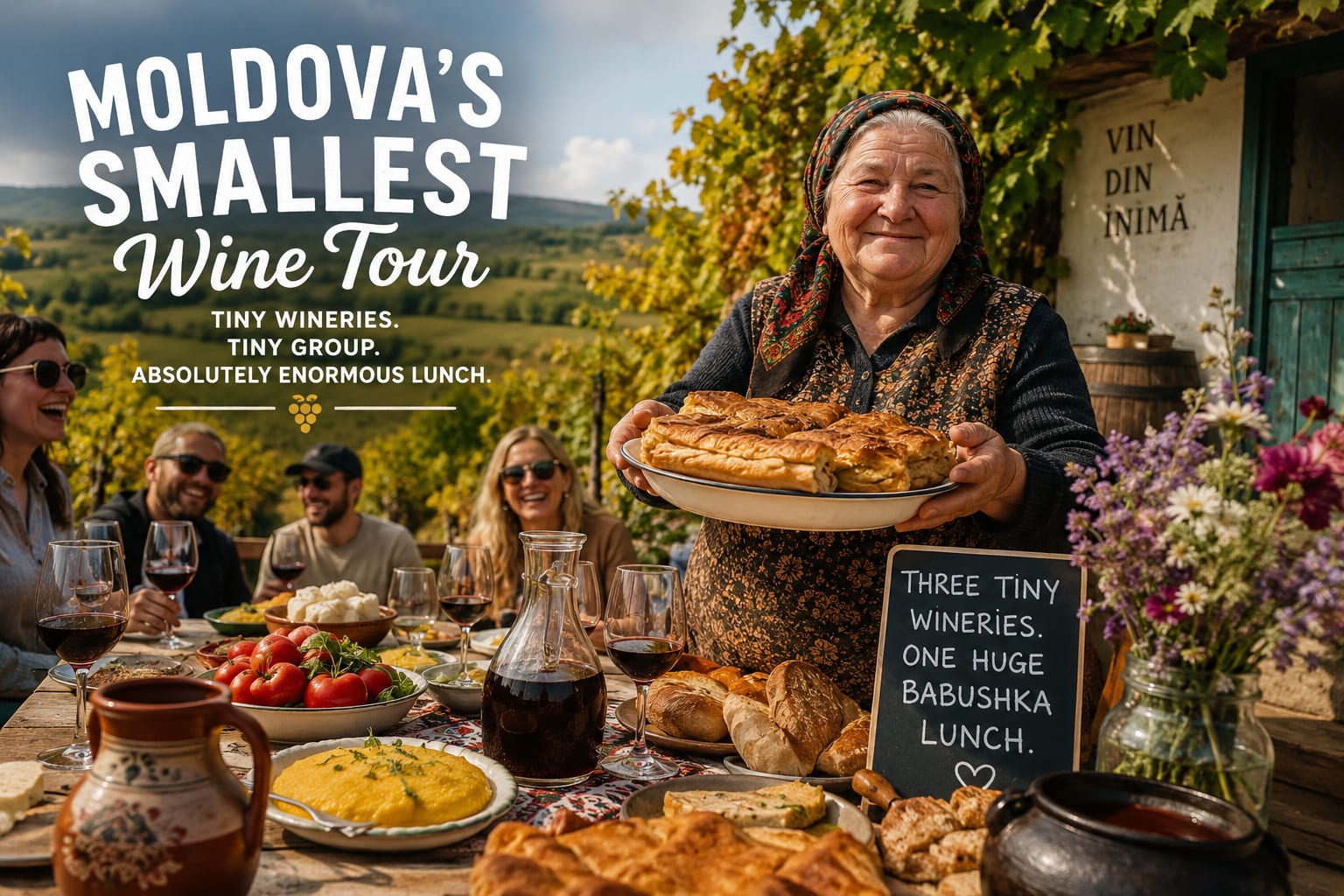
Moldova's Smallest Wine Tour
Three tiny Moldovan wineries, huge pours and a homemade babushka lunch where “I’m full” is considered a cry for help.
Private & Custom Moldova Experiences
Want something more intimate? We offer private day trips and can build multi-day custom itineraries around your interests — whether that's deep-diving into natural wines, exploring village cellars, or combining wine with food, history, or even a detour into Transnistria.
Private Day Tours
All our day experiences — the Lada Wine Safari, Boozy Winery Blitz, and Transnistria trips — are available as private bookings. Just you, your group, and a dedicated guide. Perfect for couples, small groups, or anyone who wants the full experience without sharing.
Multi-Day Custom Itineraries
Got more time? We'll build a bespoke Moldova trip around your interests. Tell us what you love — indigenous grapes, natural wine, Soviet history, village home-stays, cooking classes — and we'll create something unique. Multi-day private tours available on request.
Not sure what you want? Just ask. We've been running Moldova tours since 2018 and can suggest options based on your dates, interests, and budget.
Moldova Highlights
Moldova's Wine History: 5,000 Years of Getting It Right
Archaeologists have found grape seeds in Moldova dating back 5,000 years. For context, that's 3,000 years before the Romans started calling themselves a civilization. The Dacians who lived here were serious about their wine — serious enough that Greek historians wrote home about it. Fast forward through various empires (Byzantine, Ottoman, Russian, Soviet), and you'll find one constant: Moldova never stopped making wine. The Soviets industrialized production, creating the massive underground cellars that still exist today. Mileștii Mici holds the Guinness World Record for the largest wine collection: 2 million bottles aging in 200 kilometers of limestone tunnels carved by 15th-century miners. You drive through it. In a car. Underground. With wine on both sides. Cricova is equally absurd — a former limestone mine converted into an underground wine city complete with street names. Yuri Gagarin reportedly got so drunk during a visit that he lost two days. Vladimir Putin keeps a personal collection there (yes, really). But the real magic happens at smaller family wineries: Château Purcari (founded 1827, supplier to Queen Victoria), Et Cetera (orange wines in qvevri clay vessels), Asconi (biodynamic pioneers). These are wines that deserve global recognition but remain almost unknown outside Eastern Europe. Our Moldova wine tasting tours visit both the famous cellars and the hidden gems.
During Soviet times, Moldova produced more wine than the entire country of France — though quantity was prioritized over quality. One factory, Cricova, could bottle 2.5 million bottles per day.
Why Tipple Tours Goes to Moldova
We first came to Moldova because someone dared us to. "There's nothing there," they said. "Just corruption and cheap wine." They were spectacularly wrong about the second part. Moldova's wine industry was the jewel of the Soviet Union — Stalin himself demanded Moldovan wine for state dinners. After independence, the industry collapsed, Russia banned imports, and everyone wrote off Moldovan wine as a relic. Then something magical happened: young winemakers came home from studying in France, Italy, and Germany. They looked at their grandparents' indigenous grape varieties — Fetească, Rara Neagră, Viorica — and thought, "Why are we copying Cabernet when we have *this*?" The result is a wine scene that's simultaneously ancient and brand new. Wineries here aren't polished tasting rooms; they're family homes where the fourth generation pours wine their great-grandfather made in the same cellar. It's authentic in a way that's increasingly impossible to find anywhere else in Europe. Our Moldova wine tours take you beyond the guidebook to experience it all firsthand.
Weird Facts & Local Legends
The Wine That Survived Hitler
When Nazi forces occupied Moldova, locals bricked up entire sections of wine cellars to hide their best vintages. Some of these hidden chambers weren't rediscovered until the 1990s, containing perfectly preserved wines from the 1930s and earlier.
Transnistria: The Country That Doesn't Exist
A thin strip of Moldova declared independence in 1990. No country recognizes it, but it has its own currency, army, and very Soviet aesthetic. The Kvint brandy factory there produces surprisingly excellent cognac-style brandy. Yes, <a href='/tours/transnistria-day-trip' class='text-merlot hover:underline'>we take you there</a>.
The World Record You Can Drive Through
Mileștii Mici isn't just the world's largest wine collection — it's an underground road network. Tasting rooms have names like 'Chardonnay Street' and 'Cabernet Avenue.' The total tunnel length exceeds the Paris Metro.
National Wine Day
The first weekend of October is a national holiday celebrating wine. Entire villages open their cellars to strangers. It's basically Moldova's version of Mardi Gras, except everyone's drinking Fetească instead of Hurricanes.
Things to Do in Moldova
Explore Mileștii Mici
The world's largest wine cellar — Guinness-certified with 200km of underground tunnels and over 2 million bottles. You don't walk through it; you drive. Street signs and all.
Visit on our Moldova wine tourTour Cricova Winery
An underground wine city where even the streets have names. Angela Merkel, Vladimir Putin, and Yuri Gagarin all have private collections here. The tasting room is 80 meters underground.
Included in all Moldova toursCross into Transnistria
Visit a breakaway Soviet republic that time forgot. Hammer-and-sickle flags, Lenin statues, and excellent brandy at the Kvint factory. Your passport gets a souvenir stamp.
Book our Transnistria Day TripTaste Indigenous Grapes
Fetească Neagră, Rara Neagră, Viorica — grape varieties that rarely leave Moldova. These aren't imitation French wines; they're something entirely different and genuinely exciting.
Read our tasting guideExperience Moldovan Hospitality
Mămăligă (polenta), plăcinte (stuffed pastries), sarmale (cabbage rolls), and enough food to feed a small army. Moldovan hosts don't believe in portion control.
Join our Babushkas tourRide a Soviet Lada
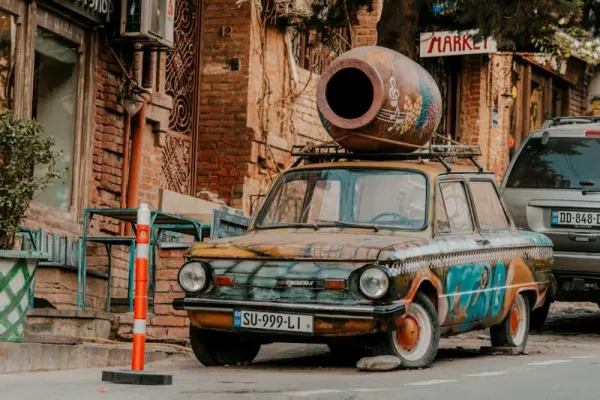
Our Lada Wine Safari takes you through Moldova's countryside in vintage Soviet cars, visiting village cellars and family winemakers off the beaten track.
Book the Lada SafariMeet Moldova's Native Grapes
While most wine regions chase Cabernet and Chardonnay, Moldova quietly tends grape varieties found nowhere else on Earth. These indigenous grapes are what make Moldovan wine genuinely unique — and why serious wine lovers are starting to pay attention.
Fetească Neagră
Moldova's flagship red grape. Think ripe dark fruits, hints of pepper, and a velvety texture that rivals good Pinot Noir. Often aged in oak, it develops complex notes of chocolate and spice. This is the grape that's putting Moldova on the fine wine map.
Rara Neagră
The name literally means 'rare black' — and it nearly went extinct. Light to medium-bodied with bright cherry notes and a floral lift. It's Moldova's answer to Beaujolais, but with a personality all its own. Perfect for those who find most reds too heavy.
Fetească Albă
Crisp, aromatic, and wildly versatile. Notes of green apple, citrus, and white flowers. Makes everything from bone-dry table wines to luscious late-harvest dessert wines. Probably the easiest Moldovan grape for newcomers to love.
Viorica
Named for its floral aromatics, Viorica produces intensely perfumed white wines with notes of muscat, elderflower, and stone fruit. It's unapologetically aromatic — the kind of wine that fills a room when you pour it.
Explore Moldova
Click the markers to discover key wineries, cities, and attractions across Moldova.
Map Legend




Best Time to Visit Moldova
Getting to Moldova
By Air
- Airport
- Chișinău International Airport (KIV)
- Flight Time from London
- 3-4 hours from London
- Airlines
- Wizz Air (direct from Luton), Turkish Airlines, Lufthansa (via hubs)
- Visa
- UK/EU/US citizens: No visa required for stays up to 90 days.
Pro Tip
Wizz Air direct flights are usually under £100 return if booked early. The airport is 15 minutes from central Chișinău — possibly Europe's easiest airport transfer.
Local Tips for Moldova
Cash is still king — many smaller wineries and restaurants don't take cards. ATMs are reliable in Chișinău.
Learn "Noroc!" (cheers) — you'll use it approximately 47 times per day.
Taxis are cheap but negotiate before getting in. Better yet, use Yandex Taxi app.
Wine is sold by the litre. Yes, the litre. Bring an expandable suitcase.
Moldovans love cognac before dinner. It's called a "digestive aperitif." Don't question it.
The Chișinău flea market sells Soviet memorabilia, military medals, and occasionally things that probably shouldn't be legal.
What Our Guests Say About Moldova
"I've done wine tours in Napa, Burgundy, and Tuscany. Moldova was different — it felt like discovering wine for the first time again. Less pretentious, more genuine, and the wines were genuinely surprising."
Sarah M.
Moldova Wine Tour, 2024
"The Lada Wine Safari was the highlight of our trip. Bouncing through villages in a Soviet car, meeting grandmothers who've been making wine for 60 years, drinking from unlabelled bottles in someone's cellar. You can't get this experience anywhere else."
James & Anna K.
Lada Wine Safari, 2026
"Transnistria blew my mind. Walking around with Lenin statues and hammer-and-sickle flags while drinking excellent brandy in a Soviet-era factory. It sounds made up, but it's real — and Tipple Tours made it feel safe and accessible."
Michael T.
Moldova Wine Tour, 2023
"I didn't know what to expect from Moldova. I left planning my return trip. The combination of incredible wine, absurdly good food, and genuine hospitality was unlike anything I've experienced in 20 years of wine travel."
Rebecca L.
Moldova Wine Tour, 2024
Moldova Travel FAQs
What are the best wineries in Moldova?
What is the best time to visit Moldova?
Is Moldova worth visiting for wine?
Can I visit Transnistria safely?
How much does a Moldova wine tour cost?
How many days should I spend in Moldova?
Is Moldova safe for tourists?
Do people speak English in Moldova?
Is Moldovan wine good?
Ready to Explore Moldova?
Join one of our small group tours and experience Moldova like a local.