Taiwan Beer, Whisky and Wine: A Beginner's Guide to the Island's Drinks
 Tipple Tours
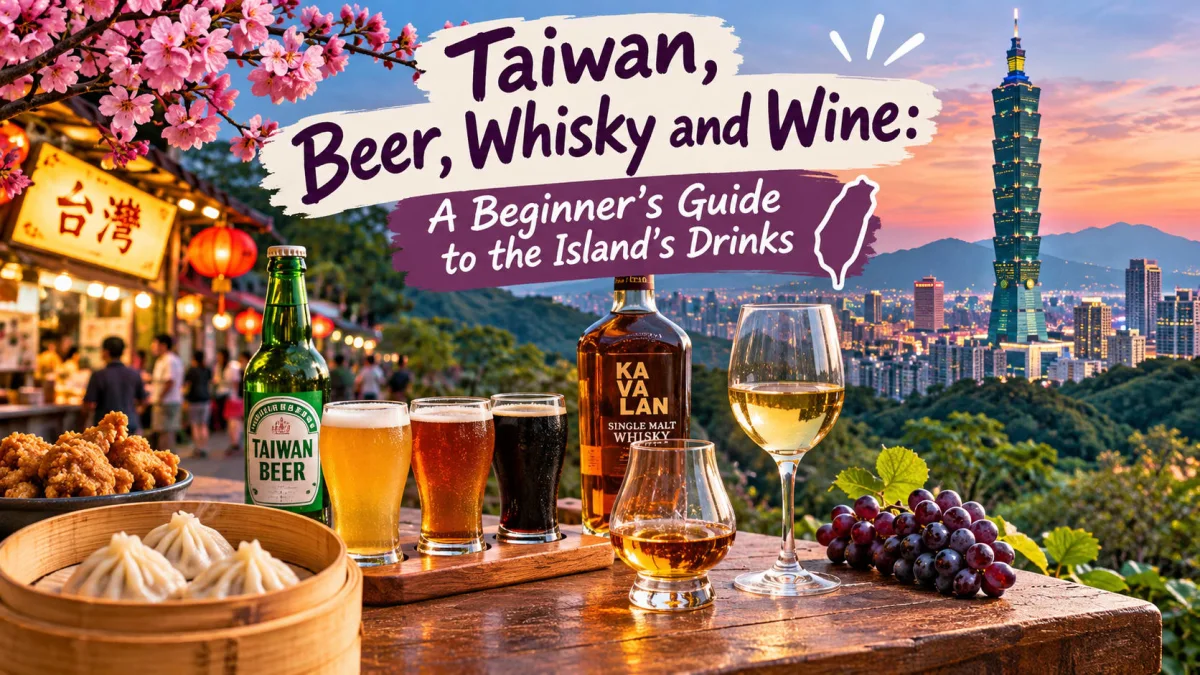
Where the whisky wins international awards, the beer comes with tropical surprises and the wine industry has apparently decided that common sense is overrated.
Taiwan is famous for its night markets, bubble tea, spectacular mountains, extraordinary street food and the sort of organised chaos that makes crossing a road feel like participating in a particularly ambitious video game. But there's another side to this fascinating island that deserves considerably more attention, especially from anyone who believes a good holiday should involve discovering something interesting in a glass.
Welcome to Taiwan, a place where world-class whisky emerges from a subtropical climate, craft breweries experiment with ingredients that would give a traditional German brewmaster a nervous breakdown and an emerging wine industry is producing bottles that have absolutely no business being this interesting. It's a country that looked at Scotland, Belgium and France and apparently decided, “We could have a go at all three. And while we're at it, let's add some pineapple.”
At Tipple Tours, we're always interested in destinations that offer more than predictable sightseeing and another afternoon being marched around a cathedral. Taiwan delivers fascinating drinking traditions, extraordinary food pairings and enough unusual flavours to keep even the most enthusiastic drinks explorer occupied. So grab a glass, abandon any assumptions about what Asian drinks should taste like and prepare to discover an island that takes its beverages surprisingly seriously.
Taiwan Beer: The National Institution That Comes With a Tropical Twist
Let's begin with the obvious choice: Taiwan Beer. Produced by the Taiwan Tobacco and Liquor Corporation, this famous lager has been part of the island's drinking culture for decades and remains one of the country's most recognisable drinks. You'll encounter it in restaurants, convenience stores, night markets and plenty of places where the food arrives faster than you've managed to work out what you've ordered.
The classic Taiwan Beer is a refreshing, easy-drinking lager, perfectly suited to the island's warm and humid climate. It's not trying to convince you that it spent eighteen months ageing in a barrel previously owned by a Belgian monk. It simply wants to be cold, refreshing and preferably accompanied by a large plate of something delicious and slightly mysterious.
But things become considerably more interesting when you discover Taiwan's fruit-flavoured beers. Mango, pineapple and other fruit varieties have appeared in the range, creating drinks that sound suspiciously like something you'd find at a children's birthday party until you remember they contain alcohol. Some are sweet and approachable, while others might leave traditional beer enthusiasts staring into the middle distance and reconsidering their life choices.
And yet, on a humid evening in Taipei, sitting outside a lively restaurant with a cold Taiwan Beer and a table covered in dumplings, it's difficult to imagine wanting anything else. Well, perhaps another plate of dumplings. And possibly a second beer, purely for comparative research.
Taiwan's Craft Beer Revolution: When Brewers Start Getting Creative
If you thought Taiwan's beer scene began and ended with a national lager, think again. The island has developed a lively craft beer industry, with independent breweries experimenting with everything from American-style IPAs and rich stouts to locally inspired beers featuring tea, fruit and other regional ingredients.
One of the best-known names is Taihu Brewing, which helped bring modern craft beer culture to a wider audience through its beers and drinking venues. You'll also encounter breweries such as Sunmai, known for incorporating Taiwanese ingredients and flavours into its brewing. These producers have helped create a beer scene that combines international brewing techniques with a distinctly local personality.
And this is where things get entertaining. Taiwan is famous for its tea, so naturally some brewers have decided to put tea into beer. Depending on the brewery and the particular release, you might encounter beers influenced by oolong, jasmine or other local flavours. It's the sort of development that would leave your grandmother wondering why someone has poured her afternoon cuppa into a pint glass.
Taipei is an excellent place to begin exploring, with craft beer bars and taprooms offering a changing selection of local and imported brews. The atmosphere is generally relaxed, and you don't need to arrive wearing a beard large enough to conceal a family of squirrels or pretend you understand the precise molecular differences between seventeen varieties of hops.
Simply order something interesting, ask a few questions and enjoy the fact that Taiwan's brewers seem determined to prove that beer can be considerably more adventurous than another predictable lager.
Kavalan Whisky: Scotland Has Some Unexpected Competition
Now we arrive at one of Taiwan's greatest drinking surprises. Whisky. Proper, internationally acclaimed, award-winning whisky, produced on an island where the climate is considerably more tropical than the Scottish Highlands and the nearest traditional Highland landscape is several thousand miles away.
The name you need to know is Kavalan, produced by the King Car Group at its distillery in Yilan County. Since beginning whisky production in the 2000s, Kavalan has earned international recognition and numerous awards, helping establish Taiwan as a serious whisky-producing destination.
The interesting part is the climate. Taiwan's warmth and humidity can accelerate interactions between whisky and oak during maturation, creating distinctive flavours and allowing relatively young whiskies to develop considerable complexity. Of course, faster maturation doesn't automatically mean better whisky, and ageing in tropical conditions brings its own challenges, including substantial evaporation losses.
Nevertheless, Kavalan has demonstrated that exceptional single malt whisky doesn't have to come from somewhere featuring misty mountains, sheep and a man called Angus. Its expressions range from approachable fruit-forward whiskies to rich, complex single-cask releases that can attract serious attention from collectors.
Visiting the distillery offers an opportunity to understand how Taiwanese whisky is produced and, where available, enjoy guided tastings. It's also a chance to explain to your Scottish friends that you've travelled halfway around the world to drink whisky somewhere considerably warmer. They'll probably insist that Scotland still does it better, although they may become strangely quiet once you've poured them a glass.
Nantou Distillery: Taiwan's Other Whisky Surprise
Kavalan might receive much of the international attention, but Taiwan has another fascinating whisky producer worth investigating. Nantou Distillery, operated by the Taiwan Tobacco and Liquor Corporation, produces whisky under the Omar name and has developed a reputation for distinctive single malts.
Located in central Taiwan, the distillery benefits from the island's warm climate and produces whiskies using different cask types and maturation approaches. Some expressions feature rich fruit flavours, while others explore the influence of wine casks and other oak treatments.
The Omar brand is an excellent reminder that Taiwan's whisky story extends beyond one famous distillery. It's also rather satisfying to discover that an island not traditionally associated with whisky has managed to produce multiple serious contenders in the international market.
For visitors, combining whisky experiences with Taiwan's spectacular central landscapes could make for a memorable journey. One minute you're admiring mountains and beautiful scenery, the next you're discussing oak maturation and trying to decide whether your whisky tastes of tropical fruit, vanilla or something considerably more expensive than you originally intended to buy.
Taiwanese Wine: Yes, They Actually Make Wine Here
This is where Taiwan becomes particularly interesting for wine lovers. Most people associate the island with tea, whisky and beer, but Taiwan also has a small and increasingly ambitious wine industry. And considering the climate, that's quite an achievement.
Taiwan is warm, humid and subject to heavy rainfall and typhoons, none of which are especially helpful when you're trying to grow grapes for quality wine. Traditional European wine varieties can struggle under these conditions, which means local producers have had to experiment with grape varieties, vineyard management and winemaking techniques suited to the environment.
Among the most interesting names is Weightstone Vineyard Estate & Winery, which has helped bring attention to Taiwanese wine through its work with locally adapted grape varieties. Another notable producer is Domaine Shu Sheng, associated with the development of Taiwan's modern wine industry and its distinctive approach to producing wines in challenging conditions.
Rather than simply copying Bordeaux or Burgundy, Taiwanese winemakers are exploring what works in their own environment. The results can include unusual aromas, tropical fruit characteristics and wines that offer something genuinely different from familiar European styles.
And that's exactly what makes the scene so appealing. Anyone can spend another afternoon discussing whether a French wine has spent fourteen or sixteen months in oak. Taiwan offers the considerably more interesting possibility of tasting something you've never encountered before, made from grapes you may never have heard of, in a country where the weather seems determined to make winemaking as difficult as possible.
The Grapes That Refuse to Behave Like Normal Grapes
Taiwan's wine industry has developed around varieties adapted to local conditions, including grapes known as Black Queen and Golden Muscat. These have played important roles in the island's winemaking history and are particularly associated with producers experimenting with locally grown fruit.
Black Queen is a red grape variety that has been used in Taiwanese wines, while Golden Muscat is associated with aromatic white wines. Their characteristics and performance in Taiwan's climate make them interesting alternatives to the familiar international varieties that dominate many supermarket shelves.
For wine enthusiasts, this is a wonderful opportunity to explore an unfamiliar side of the wine world. Rather than pretending to identify seventeen different types of oak influence while looking thoughtfully into a glass, you can simply enjoy discovering what Taiwanese winemakers are creating.
And if somebody asks whether Taiwan produces a decent Cabernet Sauvignon, you can explain that the more interesting question is why anyone would travel thousands of miles to drink exactly the same thing they could buy in Tesco.
Kaoliang: The Local Spirit That Doesn't Believe in Half Measures
No introduction to Taiwanese drinks would be complete without kaoliang, a powerful traditional spirit made primarily from sorghum. It's particularly associated with Kinmen, an island group administered by Taiwan, where Kinmen Kaoliang has become one of the country's most recognisable alcoholic products.
Kaoliang is a type of baijiu, the broad family of Chinese grain spirits, and can be considerably stronger than ordinary whisky or vodka. Some popular versions are bottled at around 58% alcohol by volume, which is the sort of figure that makes you check whether the label is describing the drink or the recommended minimum age of the distillery manager.
The flavour can be intense, aromatic and unfamiliar to anyone accustomed to European spirits. Some drinkers love its distinctive character, while others discover that their taste buds have suddenly requested an emergency meeting.
In Taiwan, kaoliang is closely associated with meals, celebrations and social occasions. It's best approached in small quantities, particularly if you're trying it for the first time. This is not a drink that requires a large glass, an enthusiastic drinking competition or someone shouting, “Go on, you'll be fine.”
Bubble Tea: Taiwan's Most Famous Drink Isn't Even Alcoholic
It would be impossible to discuss Taiwanese drinks without mentioning bubble tea, arguably one of the island's most successful cultural exports. Originating in Taiwan during the 1980s, this combination of tea, milk or fruit flavours and chewy tapioca pearls has become a global phenomenon.
You'll find bubble tea shops throughout Taiwan, offering an astonishing variety of combinations, sweetness levels, toppings and flavours. Ordering can feel like completing a complicated government application, except the final result is a refreshing drink containing small edible objects that require an unusually large straw.
For anyone accustomed to straightforward British tea, bubble tea can be quite an experience. Imagine walking into a café and being asked to select your tea, milk, sweetness percentage, ice level, pearl type and additional toppings. Back home, the biggest decision is usually whether somebody has remembered to put the kettle on.
But bubble tea is an important part of Taiwan's modern food culture, and trying it at its source is practically compulsory. It also provides an excellent non-alcoholic alternative between brewery visits and whisky tastings, particularly if your taste buds need a brief holiday of their own.
What Should You Eat With Taiwanese Beer, Whisky and Wine?
Taiwan's extraordinary food culture is one of the best reasons to explore its drinks scene. Night markets, traditional restaurants and street-food stalls offer everything from delicate dumplings and grilled seafood to rich pork dishes, fried chicken and foods that might require a short explanation before you decide whether to order them.
Taiwanese fried chicken is a natural partner for cold lager, particularly when seasoned with pepper, garlic and aromatic spices. The crisp coating and savoury flavours work beautifully with refreshing beer, making it dangerously easy to convince yourself that ordering another portion is a sensible culinary decision.
Xiaolongbao, the famous soup-filled dumplings, can work well with lighter beers or aromatic white wines. Just remember that the soup inside can be extremely hot. Nothing ruins an otherwise sophisticated tasting experience quite like biting into a dumpling and discovering you've accidentally opened a miniature steam boiler in your mouth.
Then there's stinky tofu, one of Taiwan's most famous and divisive street foods. Its powerful aroma can be detected long before you reach the stall, leading newcomers to wonder whether somebody has accidentally opened a drain nearby. The flavour is often far more approachable than the smell suggests, particularly when paired with pickled vegetables and a cold beer.
For whisky lovers, richer dishes such as braised pork, roasted meats and savoury snacks can make interesting companions. Taiwan's food scene is so varied that you'll rarely struggle to find something worth eating, although you may occasionally struggle to identify exactly what it was.
Where Should Beginners Start Their Taiwanese Drinks Adventure?
Taipei is the obvious starting point, offering an excellent combination of craft beer bars, restaurants, night markets and modern drinking venues. It's an energetic, fascinating city where you can spend the afternoon exploring temples and markets before discovering a lively beer scene in the evening.
Yilan County is particularly interesting for whisky enthusiasts thanks to Kavalan, while central Taiwan offers opportunities to explore Nantou's whisky production and some of the island's emerging wine regions. The Puli area and surrounding districts are worth investigating for visitors interested in Taiwan's wine story.
For a more unusual adventure, Kinmen offers a different atmosphere from Taiwan's main island and is strongly associated with kaoliang production. Its distinctive history, traditional architecture and famous sorghum spirit make it an intriguing destination for anyone interested in drinks beyond the familiar beer-and-whisky combination.
The important thing is not to treat Taiwan as one enormous tasting session. Its mountains, coastlines, cities, temples, markets and food culture are every bit as important as its drinks. The best experience comes from combining the two, preferably with enough time to enjoy the scenery without constantly checking whether the next brewery has opened.
When Is the Best Time to Visit Taiwan for Drinks?
Taiwan can be visited throughout the year, although weather conditions vary considerably by region and season. Spring and autumn are often attractive periods for exploring, with generally more comfortable temperatures than the height of summer. However, rainfall can occur throughout the year, and typhoons are an important consideration during the warmer months.
For whisky and brewery visits, the season is less important than opening arrangements, transport and availability of tours. Some distilleries require advance booking, while smaller wineries may have limited visitor facilities or operate by appointment only.
Wine enthusiasts should also remember that Taiwan's grape-growing calendar differs from Europe's, with local growing conditions and production methods influencing harvest timing. It's worth contacting producers directly rather than assuming that a traditional European autumn harvest schedule applies.
And if you happen to encounter a particularly wet afternoon, there are worse places to shelter than a comfortable Taipei bar offering a selection of interesting local beers. After all, nobody has ever returned from Taiwan complaining that they didn't spend enough time standing outside in the rain.
Is Taiwan Worth Visiting for Beer, Whisky and Wine Lovers?
Absolutely. Taiwan might not be the first destination that springs to mind when planning a drinks-focused holiday, but that's precisely what makes it so interesting. It's a place where you can discover internationally acclaimed whisky, inventive craft beer, unusual local wines and traditional spirits while enjoying one of Asia's most exciting food cultures.
The island also offers something increasingly rare in the world of drinks tourism: the genuine pleasure of surprise. You might arrive knowing little more than the fact that Taiwan produces electronics and bubble tea, then leave wondering why nobody told you about its whisky distilleries, experimental vineyards and remarkable craft breweries.
At Tipple Tours, we believe the best drinking adventures involve more than simply visiting famous producers and collecting tasting notes. They should introduce you to new flavours, fascinating people and places that challenge your assumptions about where great drinks can come from.
And Taiwan certainly does that. Where else could you spend the morning learning about tropical whisky maturation, the afternoon tasting wine made from unfamiliar grapes and the evening sitting in a night market with a cold beer, a plate of stinky tofu and the growing suspicion that you've discovered one of Asia's most underrated drinks destinations?
Small groups. Big pours. And absolutely no requirement to pretend you understand what the stinky tofu is doing.
Explore Related Tours
Turn This Story Into Your Adventure
Editorial Team
The Tipple Tours team writes about wine, beer, and travel based on firsthand experience running tours across Europe since 2018.
Learn more about usContinue Exploring
More Stories You'll Love
 🗺️ Destination Guides
I Went to North Korea Looking for Booze. Things Got Weird Surprisingly Quickly.
Most people visit North Korea for the history, politics or sheer curiosity. I went because I wanted to know what people were drinking. What followed involved local beer, unexpected meals and the realisation that even the world's most secretive country can surprise a wine merchant.
 🗺️ Destination Guides
Florida Isn't a State. It's a Collection of Brilliantly Bad Ideas Held Together by Sunshine
Florida has world-class breweries, beautiful beaches and enough strange stories to keep newspaper editors employed indefinitely. After exploring the Sunshine State, I've reached one conclusion: Florida isn't a destination. It's a long-running experiment that somehow escaped the laboratory.
 🗺️ Destination Guides
What Happens When a British Wine Expert Tries to Understand America
I arrived in America thinking I understood the country. Then I encountered breakfast portions the size of garden furniture, drinks filled with enough ice to preserve mammoths and breweries serving peanut butter stout. Several years later, I'm still confused. And that's exactly why I keep going back.
 🗺️ Destination Guides
The Gates of Hell and a Glass of Wine: A Guide to Turkmenistan's Most Unusual Stops
A giant burning hole in the desert, golden horses, dinosaur footprints and an underground swimming pool straight from a Bond villain's lair. Welcome to Turkmenistan, where the attractions sound completely invented, the architecture has lost all sense of restraint and even the Gates of Hell might leave you wondering where to find a decent glass of wine.
 🗺️ Destination Guides
Ashgabat's Marble City: What to Expect in Turkmenistan's Strangest Capital
Welcome to Ashgabat, where 543 marble-clad buildings, giant golden horses, suspiciously empty streets and a wedding palace shaped like a globe suggest someone gave a dictator unlimited funds and a very enthusiastic architect. Turkmenistan's capital is gloriously bonkers, dazzlingly white and possibly the world's most expensive bathroom showroom.
 🗺️ Destination Guides
I Flew to Brazil for Three Days at Christmas and Discovered Copacabana Is Much Harder Work Than It Looks
I flew from Britain to Brazil for just three days at Christmas, spent most of Copacabana Beach trying to hold my stomach in, accidentally joined a volleyball game despite not playing since childhood and discovered that Brazilian beer is served at temperatures usually reserved for organ transplants. It may not have been sensible but it was unforgettable