Ashgabat's Marble City: What to Expect in Turkmenistan's Strangest Capital
 Tipple Tours
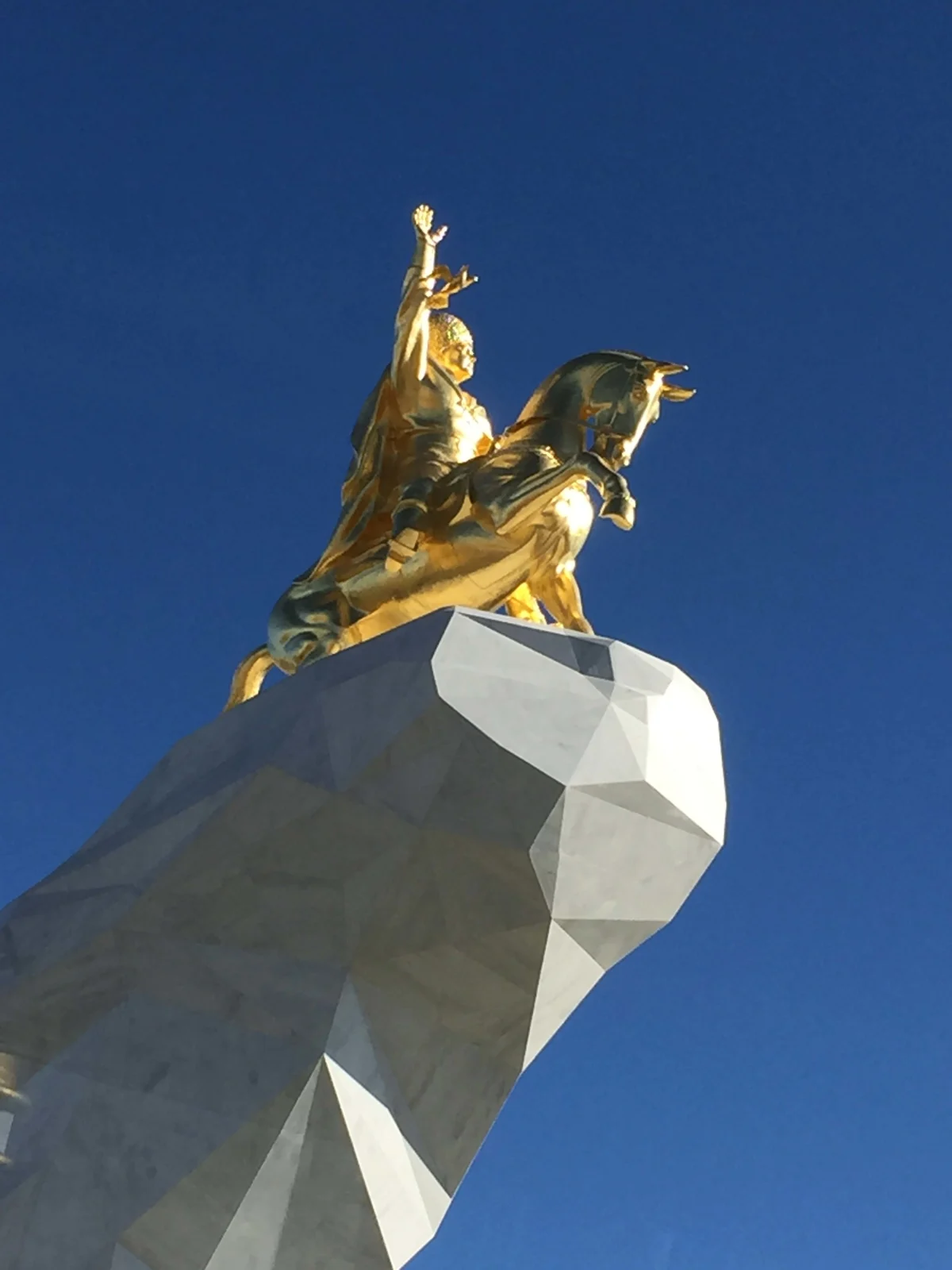
Where everything is white, the streets are suspiciously spotless and the architecture suggests someone gave a billionaire unlimited access to a marble quarry.
Welcome to Ashgabat, the capital of Turkmenistan, a place so gloriously peculiar that even Las Vegas might take one look and say, “Steady on, mate.” Imagine a city filled with enormous white marble buildings, golden statues, perfectly manicured gardens, gigantic monuments and roads so immaculate you start wondering whether you're actually allowed to use them. Now imagine all of that in the middle of Central Asia, surrounded by desert, in one of the world's most tightly controlled countries.
At Tipple Tours, we love destinations that make you question whether you've accidentally wandered onto a film set. And Ashgabat doesn't just tick that box. It builds a 75-metre monument to the box, covers it in marble and illuminates it after sunset. This is a capital where subtlety appears to have been declared a national emergency and every architect seems to have received the same instruction: make it bigger, make it whiter and, if possible, stick something golden on top.
The World's Most Extravagant Marble Obsession
Most cities have a distinctive architectural style. Paris has its elegant boulevards, Rome has its ancient ruins and London has buildings that appear to have been designed by six different committees having a disagreement. Ashgabat has white marble. Lots of white marble. So much white marble that you begin to suspect the country's entire economy is secretly controlled by a particularly ambitious bathroom supplier.
In fact, Ashgabat earned a Guinness World Records title in 2013 for having the highest concentration of white marble-clad buildings, with 543 recorded across an area of 4.5 million square metres. Government ministries, hotels, apartment blocks and enormous public buildings gleam under the Turkmen sun. Some resemble futuristic palaces while others look like the headquarters of an international organisation dedicated to extremely expensive kitchen worktops. You'll probably take approximately 400 photographs before realising you've photographed the same building from 19 different angles.
The overall effect is extraordinary, especially when the brilliant white buildings contrast with the deep blue sky. It's certainly impressive, although you can't help wondering who cleans it all. Somewhere in Ashgabat, there must be a window cleaner with a fleet of helicopters and a nervous breakdown.
Where Is Everybody? The Mystery of the Empty Streets
One of the strangest things visitors notice about Ashgabat is how quiet some of its grand avenues and monumental districts can appear. There are enormous roads, perfectly maintained pavements, elaborate fountains and impressive public squares. Yet in certain areas, you might find yourself wondering whether the entire population has popped out for lunch or whether you've accidentally arrived during a national game of hide-and-seek.
Of course, Ashgabat isn't actually empty. People live, work, shop and go about their daily lives here, although the quieter ceremonial districts create a very different impression from the crowded streets of other Asian capitals. Head towards local markets and residential neighbourhoods and you'll discover a much livelier city, complete with ordinary people doing ordinary things in a country that often seems determined to make everything look extraordinary.
Still, there's something wonderfully surreal about standing beside an enormous golden monument with barely another tourist in sight. In most capitals, you spend half your holiday trying to avoid strangers wandering into your photographs. In Ashgabat, you may find yourself waiting for someone to appear just to prove the city hasn't been evacuated.
The Golden Horse That Has More Prestige Than Most World Leaders
Turkmenistan absolutely adores its horses, particularly the magnificent Akhal-Teke breed, famous for its elegance, endurance and sometimes striking metallic-looking coat. These animals are national treasures and feature prominently in Turkmen culture, history and national identity. Naturally, Ashgabat celebrates them with enormous monuments, because apparently a commemorative plaque and a nice photograph weren't going to cut it.
You'll encounter horse statues in various parts of the capital, often positioned with the sort of dramatic confidence normally reserved for victorious Roman emperors. Some are spectacularly elaborate and others look as though the horse has just won a general election with a landslide majority. If horses had LinkedIn profiles, the Akhal-Teke would describe itself as a visionary leader, cultural ambassador and internationally recognised icon with extensive experience in national prestige projects.
And frankly, it would have the monuments to prove it. Most British horses are lucky if someone buys them a new blanket and remembers their birthday. In Turkmenistan, they get enormous statues and a level of public admiration usually reserved for royalty.
The Wedding Palace That Looks Like an Alien Has Booked the Reception
Ashgabat's Wedding Palace, known as Bagt Köşgi, is one of the city's most spectacularly bizarre buildings. It features a gigantic globe surrounded by an eight-pointed star, perched above an elaborate structure designed for wedding ceremonies. It's enormous, gleaming and looks suspiciously like something an extraterrestrial civilisation might construct after watching three episodes of Don't Tell the Bride.
Imagine telling your friends you're getting married inside a giant golden globe in Turkmenistan. Most couples spend months arguing about table decorations, seating arrangements and whether Uncle Barry should be allowed anywhere near the microphone. Here, the venue itself looks as though it could launch into orbit halfway through the speeches.
The building is an extraordinary example of Ashgabat's approach to architecture, where subtlety is apparently considered a missed opportunity. It's also a reminder that in Turkmenistan, even getting married can involve architecture on a scale normally associated with international airports. You can only imagine the wedding photographer's instructions: “Could everyone move slightly to the left? I'm trying to fit the entire planet into the picture.”
A Monument to Neutrality. Yes, Really.
Most countries celebrate independence, military victories or important historical figures. Turkmenistan also has a monument celebrating neutrality, and naturally it's enormous. The Monument of Neutrality is one of Ashgabat's most recognisable landmarks, topped by a golden statue of former president Saparmurat Niyazov, who was rather fond of leaving his mark on the country's architecture.
The original monument famously featured a rotating golden statue that turned to face the sun. The monument was subsequently relocated and rebuilt, and the statue no longer rotates. Nevertheless, the concept of a giant golden president following the sun across the sky remains one of the most gloriously unusual architectural decisions you're likely to encounter anywhere.
It's difficult not to imagine the planning meeting. Someone suggests a tasteful sculpture celebrating international neutrality, perhaps accompanied by a small garden and an informative plaque. Another person proposes a colossal golden president rotating towards the sun. Apparently, the second suggestion won, presumably after the first architect was quietly escorted from the building.
The Giant Indoor Ferris Wheel Nobody Saw Coming
Just when you think Ashgabat has exhausted its architectural surprises, along comes the Alem Entertainment Centre. This futuristic structure houses a giant enclosed Ferris wheel, which received a Guinness World Records title when it opened in 2012. Yes, an enclosed Ferris wheel, because an ordinary outdoor version would apparently have been far too predictable for a city already overflowing with architectural extravagance.
The structure resembles a gigantic futuristic spacecraft and is another excellent example of Ashgabat's enthusiasm for buildings that look as though they belong in a science-fiction film. In most cities, the Ferris wheel is something you spot on the waterfront or at a fairground. Here, someone decided it needed its own enormous building, presumably to protect it from the embarrassment of being mistaken for an ordinary tourist attraction.
By this point in your visit, you may have stopped asking sensible questions entirely. A giant indoor Ferris wheel? Naturally. A wedding palace shaped like a globe? Of course. A monument celebrating neutrality? Why wouldn't there be? Ashgabat gradually convinces you that normal architecture is something other countries do because they lack imagination.
The City Where the Rules Are as Unusual as the Buildings
Before you pack your suitcase and start practising your best marble-related jokes, there's something important to understand. Turkmenistan is not an ordinary tourist destination. It's a highly restrictive country with strict controls on movement, photography and public behaviour. Independent travel can be difficult and visitors commonly explore the country with authorised guides, which makes careful planning particularly important.
Certain government buildings, military installations and security-sensitive locations must not be photographed, while restrictions can change without much warning. In other words, this isn't the place to launch your career as an undercover architectural photographer. Your local guide will be invaluable when it comes to understanding where you can go, what you can photograph and which situations are best avoided.
The internet can also be heavily restricted, with many popular websites, messaging services and social media platforms blocked or unreliable. If your holiday normally involves uploading 47 Instagram stories before breakfast, Ashgabat may present a slight administrative challenge. On the positive side, you'll finally have an excellent excuse for ignoring the family WhatsApp group.
Behind the grand monuments and official architecture, however, are real communities, fascinating traditions, bustling markets and people whose everyday lives are considerably more interesting than any government-approved postcard. The trick is experiencing the city with curiosity, respect and a knowledgeable local guide. And perhaps saving your more sarcastic observations about presidential statues until you're comfortably back at the hotel.
Is There Actually Anything to Drink in Turkmenistan?
Now we're asking the important questions. After all, this is Tipple Tours, not the International Association of People Who Admire Marble While Remaining Completely Sober. Turkmenistan does have a drinking culture, although it's quite different from the vineyard regions of Georgia or the beer halls of Germany. Beer and vodka are available in some hotels, restaurants and licensed establishments, although availability and local regulations vary.
You may encounter local beer brands such as Berk during your travels, alongside imported drinks depending on the establishment. There are also traditional teas, regional food specialities and opportunities to experience Turkmen hospitality. The local cuisine features dishes such as plov, shashlik and various meat-filled pastries, all of which provide a welcome change from spending the afternoon staring at extraordinarily expensive-looking buildings.
After a full day exploring enormous monuments, marble palaces and suspiciously immaculate boulevards, sitting down with a cold beer and attempting to explain what you've just seen might be one of the day's greatest pleasures. Imagine returning to your hotel and announcing that you've visited a wedding palace shaped like a globe, admired a golden president and discovered an indoor Ferris wheel. Your friends will probably ask how many beers you've had. The answer, rather disappointingly, might be just one.
What Else Should You See in Ashgabat?
If you've still got room on your camera after photographing enough marble to renovate Buckingham Palace, there are several more places worth investigating. The Independence Monument is a spectacular white-and-gold structure surrounded by elaborate landscaping, while the Turkmen Carpet Museum celebrates the country's extraordinary weaving traditions, including some truly enormous carpets. Turkmenistan takes its carpets seriously, which is understandable when you've spent centuries perfecting something that the rest of us mostly use to hide stains.
Then there's the Altyn Asyr Bazaar, also known as Tolkuchka Bazaar, where you'll find a far more colourful and lively side of the capital. The market offers everything from traditional textiles and carpets to household goods and everyday essentials. It's a welcome opportunity to see ordinary commercial life rather than another perfectly manicured roundabout featuring an enormous golden object.
You can also visit the magnificent Ruhy Mosque in nearby Gypjak, a building so grand that even the pigeons must feel underdressed. But perhaps Ashgabat's greatest attraction is simply the experience of being there. Few capitals offer such an unusual combination of futuristic architecture, political symbolism, ancient traditions and urban planning that occasionally feels as though someone has been playing SimCity with unlimited funds.
Practical Tips Before Visiting Ashgabat
Getting there: Ashgabat International Airport is the main gateway to Turkmenistan, with international flight connections depending on current airline schedules. British travellers should check routes carefully because this isn't a destination where you can necessarily find a convenient budget flight departing every afternoon.
Visas: British visitors need a visa and should check the latest Turkmen entry requirements before making arrangements. Visa procedures can involve sponsorship and supporting documentation, so it's worth using an experienced local tour operator rather than attempting to improvise your way through the bureaucracy.
Money: Bring sufficient clean US dollar notes and exchange currency through official channels. International card payments can be limited, so don't assume you'll be able to wave your contactless card at every restaurant, shop or marble-related souvenir opportunity.
Best time to visit: April to May and September to October are generally more comfortable for exploring. Summer temperatures can become fiercely hot, and while Ashgabat has plenty of marble, it doesn't necessarily offer much shade. Nobody wants to discover they've spent the afternoon slowly cooking themselves beside a giant golden horse.
Photography and internet: Always check before photographing official buildings or sensitive locations and don't expect unrestricted access to your usual apps. Download essential travel information before arriving and follow your guide's advice. This is one destination where a little preparation can prevent an awful lot of unnecessary complications.
Is Ashgabat Worth Visiting?
Absolutely, provided you enjoy unusual destinations, surreal architecture and travel experiences that leave your friends wondering whether you've made the whole thing up. Ashgabat isn't necessarily beautiful in the traditional sense. It can feel artificial, excessively grand and strangely quiet, while its spectacular architecture also comes with a more complicated story about government spending, political control and the displacement of some residents during redevelopment.
But that contrast is part of what makes the city so fascinating. It's a capital unlike anywhere else, where the buildings look futuristic, the monuments are enormous and the marble industry appears to have won the lottery. One moment you're admiring an astonishing piece of architecture and the next you're wondering why someone decided a perfectly respectable building needed to be twice as tall and topped with a golden horse.
At Tipple Tours, we believe the best travel stories rarely begin with “We visited a perfectly normal city and everything went exactly as expected.” They begin with something more along the lines of “So there we were, standing outside a giant golden wedding globe in the middle of Turkmenistan, trying to work out whether we'd accidentally travelled 200 years into the future.”
And that's precisely the sort of holiday story we like. Ashgabat might not be everyone's idea of a relaxing city break, but if you enjoy extraordinary places, unexpected discoveries and returning home with stories that sound completely invented, it deserves a place on your travel wish list.
Small groups. Big pours. Occasionally, an absolutely unreasonable amount of marble.
Explore Related Tours
Turn This Story Into Your Adventure
Editorial Team
The Tipple Tours team writes about wine, beer, and travel based on firsthand experience running tours across Europe since 2018.
Learn more about usContinue Exploring
More Stories You'll Love
 🗺️ Destination Guides
The Gates of Hell and a Glass of Wine: A Guide to Turkmenistan's Most Unusual Stops
A giant burning hole in the desert, golden horses, dinosaur footprints and an underground swimming pool straight from a Bond villain's lair. Welcome to Turkmenistan, where the attractions sound completely invented, the architecture has lost all sense of restraint and even the Gates of Hell might leave you wondering where to find a decent glass of wine.
 🗺️ Destination Guides
I Went to North Korea Looking for Booze. Things Got Weird Surprisingly Quickly.
Most people visit North Korea for the history, politics or sheer curiosity. I went because I wanted to know what people were drinking. What followed involved local beer, unexpected meals and the realisation that even the world's most secretive country can surprise a wine merchant.
 🗺️ Destination Guides
I Flew to Brazil for Three Days at Christmas and Discovered Copacabana Is Much Harder Work Than It Looks
I flew from Britain to Brazil for just three days at Christmas, spent most of Copacabana Beach trying to hold my stomach in, accidentally joined a volleyball game despite not playing since childhood and discovered that Brazilian beer is served at temperatures usually reserved for organ transplants. It may not have been sensible but it was unforgettable
 🗺️ Destination Guides
The Time I Hosted a Wine Tasting Inside Chernobyl (Apparently a Normal Venue Was Too Obvious)
Most wine tastings take place in vineyards, cellars or hotels. Mine took place inside the Chernobyl Exclusion Zone after a day exploring abandoned cities and one of history's most famous disaster sites. Looking back, it remains the most unusual venue I've ever used and one of the best stories I've ever brought home.
 🗺️ Destination Guides
25 Weird Things To Do In Transnistria: Europe's Most Fascinating Wrong Turn
Transnistria has Lenin statues, Soviet mosaics, rope ferries, giant bottle collections and a currency recognised by almost nobody. After years of exploring the region, I've come to one conclusion: it's either Europe's strangest destination or its most entertaining. Possibly both.
 🗺️ Destination Guides
Taiwan Beer, Whisky and Wine: A Beginner's Guide to the Island's Drinks
World-class whisky, tropical craft beers, surprisingly good wine and a local spirit strong enough to make a Scotsman reconsider his career choices. Welcome to Taiwan, where brewers put tea in beer, winemakers battle typhoons and the drinking culture is almost as wonderfully bonkers as the food.