Why Is Everyone Staring at Me? The Tipple Tours Guide to the International Staring Championships
 Tipple Tours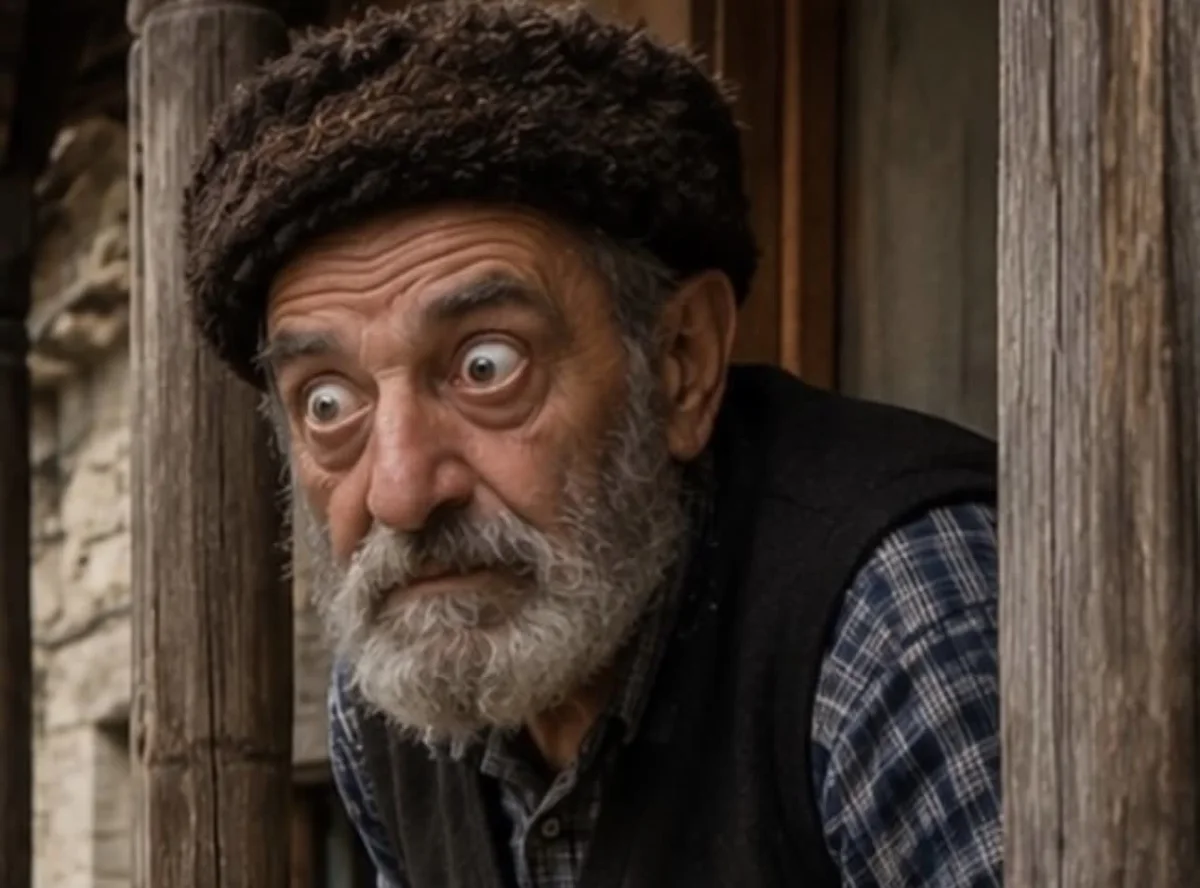
There are certain things you expect when travelling. Different food, different languages, different customs, toilets that require an engineering degree and taxi drivers who apparently learned navigation from a man who once glanced at a map in 1987.
What you don’t necessarily expect is to become the main attraction.
You’re not famous. You’re not wearing a Viking helmet. You haven’t accidentally wandered into a wedding carrying a goat. You’re simply walking down the street, sitting in a café or enjoying a quiet beer when you suddenly realise that somebody is staring at you.
Not glancing. STARING.
The sort of sustained eye contact that eventually makes you perform a complete systems check. Is my fly undone? Have I got breakfast on my face? Is there something hanging out of my nose? Has a pigeon landed on my head? Am I unknowingly dragging a small table behind me?
No.
Apparently you’re just extremely interesting.
And after travelling around a fair chunk of the world, we’ve discovered that staring isn’t merely something people do. In certain countries, it appears to be a competitive discipline.
FRANCE: THE PROFESSIONAL STARE
I used to think the French were world champions.
Walk into a little café somewhere in France and you can occasionally feel the atmosphere change. Three elderly men slowly rotate towards you. A woman lowers her coffee. The barman looks up. Even the dog appears to be reconsidering your presence.
You say, “Bonjour.”
Nothing.
You order a beer, sit down and attempt to behave like a completely normal human being, while half the room continues studying you as though you’ve just been added to the specials board.
The French stare is beautifully understated. It doesn’t necessarily say go away. It’s more:
“We have noticed you. Your file is now being reviewed.”
What impresses me most is the commitment. In Britain, if you accidentally stare at somebody and they notice, you immediately look away and pretend you were actually studying an extremely interesting drainpipe behind them.
In France, you catch someone’s eye. They continue looking. You look away. You wait five seconds. You look back.
They’re still bloody looking.
At that point, you’ve almost got to respect the professionalism.
GERMANY: NO NONSENSE, JUST EYE CONTACT
Germany deserves a mention because the German stare is wonderfully efficient. There’s very little theatre involved. Somebody simply looks directly at you for considerably longer than your British nervous system considers acceptable.
You catch them looking and expect the normal international procedure to kick in, where both parties immediately glance elsewhere.
It doesn’t.
They’re still looking.
You look at your phone. You look out of the window. You inspect a nearby tree. Eventually you look back and discover that the investigation remains active.
There’s no obvious aggression and often no judgement whatsoever. It’s just extremely solid eye contact. German engineering, but for eyeballs.
You almost expect TÜV certification.
ITALY: THE FULL INSPECTION
Then I came to Italy.
I genuinely thought France had this competition sewn up, but Italy entered the tournament and immediately brought flair, passion and a judging panel.
The French observe.
The Italians investigate.
You walk into a café and somebody looks you up and down with the intensity of a customs officer who has just received an anonymous tip.
Shoes. Trousers. Shirt. Face. Hair. Back to shoes.
There appears to be a complete assessment taking place, and you can almost see the scorecard being completed.
Shoes: 4/10
Shirt: questionable
Hair: needs attention
Nationality: almost certainly British
Overall presentation: concerning
The wonderful thing is that there’s not necessarily any hostility involved. They’re just looking. Really, really looking.
After a while you begin wondering what exactly they’re hoping happens next. We’ve now maintained eye contact for long enough that socially something needs to happen.
Should I stand up? Do a little dance? Produce a rabbit? Open a bottle of Chianti with my shoe?
Anything to provide some sort of conclusion.
TURKEY: THE CURIOUS STARE
Turkey adds another dimension because sometimes the stare is simply the opening act.
Someone looks at you from across the street. They continue looking. Eventually you smile, they smile, and five minutes later they’re asking where you’re from, whether you’re married, how many children you have, what football team you support and why you haven’t yet tried the tea.
You’ve gone from complete strangers to what feels suspiciously like an immigration interview, except someone’s brought biscuits.
Then somebody else joins in. Now three people know where you’re staying, what you think of Turkey and approximately how much you paid for your flight.
And strangely, it’s rather lovely.
You may have begun the afternoon wondering why everyone was looking at you and ended it sitting on a tiny chair drinking tea with a man called Mehmet whose cousin apparently owns a hotel, a carpet shop, two goats and possibly half of Antalya.
INDIA: YOU MAY ACTUALLY BECOME THE TOURIST ATTRACTION
India can take the experience to another level, particularly if you’re somewhere less dominated by international tourism.
Sometimes people aren’t merely looking at you. They’re genuinely curious about you.
Where are you from? What’s your name? Are you married? Can we have a photograph?
Suddenly you’re posing for photographs with people you’ve never met. Then another family notices and wants one too. Someone hands you a baby. You have absolutely no idea what is happening, but there are now seventeen photographs of you on phones belonging to people whose names you don’t know.
You arrived hoping to photograph India.
India has decided to photograph you.
This is an important reversal in the natural order of tourism.
EASTERN EUROPE: THE BUS-STOP SPECIALISTS
Parts of Eastern Europe deserve recognition for perhaps the purest form of staring known to mankind: the elderly person at the bus stop.
This person has nowhere else they particularly need to look.
They’ve seen the road before. They’ve seen the bus stop. They’ve seen the shop opposite. They’ve probably been sitting on this exact bench since 1983.
Then you appear.
Fantastic.
Today’s entertainment has arrived.
You can feel the eyes following you as you walk past. Occasionally there will be a second elderly person beside them, allowing information to be exchanged while you’re still within visual range.
One looks at you.
Says something.
The other looks.
Now they both look.
You’ve become local breaking news.
AND THEN THERE’S GEORGIA
But France, Germany, Italy, Turkey and everyone else are merely qualifying rounds.
Because eventually you arrive in Georgia.
And Georgia says:
“Hold my chacha.”
Georgia takes staring to a completely different level. This isn’t casual observation anymore. This is surveillance.
Walk into a Georgian village and an elderly gentleman sitting on a plastic chair will spot you from approximately 600 metres away. He will watch you approach, continue watching as you pass and, if physically capable, rotate through 180 degrees to continue monitoring your departure.
No smile. No nod. No attempt to pretend he’s looking at something behind you.
Just absolute dedication.
And Georgian grandmothers?
Different league entirely.
A Georgian grandmother can look at you for four seconds and somehow establish your age, marital status, approximate income, alcohol consumption, digestive health and whether you’ve been eating properly.
She doesn’t need Ancestry.com. She knows your entire bloodline.
There is also a reasonable chance she’ll disappear into a house and return carrying enough food to feed the Welsh rugby team.
This is the beautiful Georgian staring paradox. The man who has spent the last ten minutes looking at you as though you’re wanted by Interpol may suddenly walk over, shake your hand and offer you wine.
Twenty minutes later you’re sitting at his table. Thirty minutes later you’re eating khachapuri. Forty minutes later somebody has produced homemade chacha from an unlabelled plastic bottle that was previously underneath the sink.
An hour later you’re involved in a toast to somebody’s grandfather. You have absolutely no idea whose grandfather, but apparently he was a magnificent man and you now miss him terribly.
THE OFFICIAL TIPPLE TOURS INTERNATIONAL STARING LEAGUE
After extensive Tipple Tours scientific research, conducted mainly while drinking beer and whispering “Why does that bloke keep looking at me?”, we can finally publish the standings.
BRITAIN 🇬🇧 — ★☆☆☆☆
Hopeless. Looks away immediately when caught and may actually apologise. Can sit beside another human being on a train from London to Edinburgh without acknowledging their existence.
FRANCE 🇫🇷 — ★★★☆☆
Elegant, controlled and slightly judgemental. Particularly strong café performance. Excellent endurance.
GERMANY 🇩🇪 — ★★★★☆
Technically outstanding. Minimal facial movement. Unwavering eye contact. Possibly regulated by DIN standards.
TURKEY 🇹🇷 — ★★★★☆
Strong opening stare, frequently followed by tea, questions and the unexpected acquisition of a new friend.
INDIA 🇮🇳 — ★★★★☆
High curiosity levels with bonus points for progressing from staring to a full family photograph within three minutes.
ITALY 🇮🇹 — ★★★★★
The complete visual inspection. Clothing will be assessed. Shoes will definitely be assessed. Results may be communicated silently to nearby relatives.
GEORGIA 🇬🇪 — ★★★★★★★★★★★
The scoring system has collapsed. No upper limit. May involve several generations, neighbouring properties and a man watching from a Lada. Frequently concludes with wine, food and friendship.
THE BRITISH ARE ACTUALLY THE WEIRD ONES
After travelling enough, you eventually realise something slightly uncomfortable.
Perhaps we’re the strange ones.
Britain is a country where acknowledging a stranger on public transport can cause a minor constitutional crisis. Someone can sit opposite you on a train for three hours and we don’t ask where they’re going, where they’re from or what their name is.
Then the train arrives and we both disappear forever.
Perfect.
In plenty of other countries, people are simply more curious. Who’s that? Where are they from? Why are they here? Why is that British man photographing a beer?
Why has he photographed every beer?
Why is he now photographing the menu? Why is he talking to the barman? Why has he ordered another one?
Actually, that’s fair.
THE TIPPLE TOURS SOLUTION
So we’ve developed a simple international protocol.
If somebody stares at you while travelling, smile. If they keep staring, say hello. If they’re still staring after that, raise your glass and accept that you’ve apparently become part of today’s entertainment.
And if you’re in Georgia, clear your diary.
There’s a reasonable chance you’ve just been invited to dinner. You’ll probably meet twelve relatives, there will definitely be wine, someone will make a toast lasting seventeen minutes and eventually a mysterious bottle containing a completely transparent liquid will appear from somewhere nobody thought to question.
At approximately midnight, while drinking something homemade that could theoretically power agricultural machinery, you’ll suddenly realise something wonderful.
Nobody’s staring at you anymore.
They’re all staring at the next tourist who’s just walked in.
Welcome to travelling.
TIPPLE TOURS
Small groups. Big pours. Even bigger audiences.
Explore Related Tours
Turn This Story Into Your Adventure

Editorial Team
The Tipple Tours team writes about wine, beer, and travel based on firsthand experience running tours across Europe since 2018.
Learn more about usContinue Exploring
More Stories You'll Love
 🗿 Soviet & Strange
The World's Weirdest Wine Regions: Places That Prove Grapes Have Better Adventures Than Most People
I've tasted wine beside volcanoes, inside underground cities and in countries that most travellers couldn't locate on a map. After twenty-five years in the wine trade, I've discovered that the world's weirdest wine regions often produce the best stories, and occasionally the best wine too.
 🗿 Soviet & Strange
Moldova's Most Bizarre Attractions: The Places That Made Me Wonder If I'd Taken a Wrong Turn
Most people come to Moldova for the wine. I did too. What I didn't expect were giant Soviet mosaics, abandoned mega-hotels, underground wine cities and a breakaway republic that feels like a time machine. Welcome to Moldova's wonderfully weird side.
 🗿 Soviet & Strange
25 Weird Things To Do In Transnistria: Europe's Most Fascinating Wrong Turn
Transnistria has Lenin statues, Soviet mosaics, rope ferries, giant bottle collections and a currency recognised by almost nobody. After years of exploring the region, I've come to one conclusion: it's either Europe's strangest destination or its most entertaining. Possibly both.
 🗿 Soviet & Strange
The Complete Guide to Soviet Tiraspol: Europe's Most Unexpected Capital City
Tiraspol has giant Lenin statues, Soviet tanks, excellent brandy and enough Cold War atmosphere to make visitors check the date on their phone. After countless visits, I've realised it's not Europe's strangest capital. It's Europe's most fascinating surprise.
 🗿 Soviet & Strange
Why I Support KFC Instead Of A Football Team
I've never really understood football. Wherever I travel, somebody eventually asks who I support, and the look on their face when I answer "KFC" is always priceless. While millions spend their weekends watching grown men kick a ball into a net and occasionally fall over clutching a leg like a four-year-old denied an ice cream, I've assembled my own dream team featuring Big Daddy Bucket in goal, Gravy in midfield and Onion Ring running enthusiastically in circles. The world would be a very boring place if we all loved exactly the same thing.
 🍺 Beer Adventures
Why Wine & Beer Tours Are More Fun Than Therapy (And Usually Cheaper)
After years running boozy tours, I've noticed a pattern. Guests arrive stressed, glued to their phones and talking about work. A few days later they're laughing with strangers in vineyards and breweries wondering why they don't do this more often. Coincidence? Possibly. Wine and beer certainly isn't hurting.